
The short version
The 2026 shirts are, objectively, better designed and better made than the classics they are compared to. They are also less loved, and probably always will be. That is not a contradiction. It is what happens when the things that made old shirts precious, scarcity, imperfection and the absence of choice, get engineered out of the modern game.
In this article
- The comparison everyone gets wrong
- The simple era, and why it was simple
- The nineties, and the peak of expression
- The template years
- 2026 and the return of storytelling
- Where 2026 genuinely beats the classics
- What the classics have that 2026 cannot get
- The verdict
- Owning both
- Frequently asked questions
Ask a collector whether modern football shirts are as good as the old ones and you will get a firm answer, usually no, followed by reasoning that does not quite hold up. The 2026 World Cup is a useful test case, because it produced the largest and arguably strongest field of kits in the tournament's history and still, for a lot of people, does not feel like it belongs in the same conversation as 1970 or 1990. It is worth working out why, because the honest answer is more interesting than nostalgia.
The Comparison Everyone Gets Wrong
The usual framing is quality: were shirts better then or now? It is the wrong question, because the answer is obvious and uninteresting. Modern shirts are better made, better fitted, more durable and more sophisticated in construction than anything produced before about 2005. Nobody who has handled a 1990 shirt and a 2026 shirt back to back seriously disputes this.
The real question is why the worse-made shirts are the ones people want. And the answer has almost nothing to do with design, and almost everything to do with scarcity, memory and the conditions in which those old shirts existed.

The Simple Era, and Why It Was Simple
The shirts of the sixties and seventies are revered for their simplicity, and it is worth being clear that the simplicity was not a design choice. Manufacturing could not do much else. Fabrics were heavy, printing was crude, and the tools for pattern and graphic work barely existed. What you got was a solid colour, a badge and a collar.
Brazil 1970 is the definitive example, and the definitive proof that constraint can produce perfection. Plain yellow, green trim, worn by the finest team ever assembled and broadcast in colour for the first time. It is the greatest football shirt ever made and there is essentially nothing to it. No modern designer would be allowed to submit it.
That is the first honest lesson in the comparison. The classics were not competing on design ambition, because design ambition was not available. They were competing on association, and they won.
The Nineties, and the Peak of Expression
Then the technology caught up and, for roughly a decade, nobody knew what to do with it. Sublimation printing arrived, synthetic fabrics took over, and manufacturers could suddenly put anything on a shirt. So they did.
The results were wild and inconsistent and produced some of the most beloved kits in football. Germany 1990's tricolour chevron. Nigeria 1994 on debut. Croatia's chequerboard in 1998. Denmark 1986 had already shown what bravery looked like with a halved shirt and pinstripes. Jorge Campos designed his own goalkeeper kits for Mexico in 1994 and made the position visually interesting for the first time.
What distinguishes the nineties is not that everything was good. Plenty was terrible. It is that the failures were interesting failures, and interesting failures age far better than safe successes. Our wider look at that period sits in the best retro football shirts of all time.
The Template Years
Then came the correction, and it is the part of kit history nobody is nostalgic about. Through the 2000s and much of the 2010s, manufacturers consolidated around templates: one base design applied across dozens of national teams with the colours swapped and the badge changed.
It was commercially sensible and creatively barren. It produced shirts that were perfectly well made, entirely competent and completely anonymous, and it is the main reason the "modern kits are worse" argument gained traction in the first place. For fifteen years or so it was largely true, not because the shirts were badly designed but because they were barely designed at all.
Understanding this matters for judging 2026 fairly, because 2026 is the reaction to it.

2026 and the Return of Storytelling
On the evidence of this tournament, the template era is over. 2026's best kits were built around ideas rather than around a base pattern, and several of them were ideas no previous generation could have executed.
South Korea wove a white tiger into the fabric in tonal camouflage, visible only up close. France produced a glacier-green away honouring the Statue of Liberty, the monument France gave the host nation. Argentina rendered the sky-blue and white stripes as a three-tone gradient, each shade referencing a World Cup-winning side of 1978, 1986 and 2022, and it was widely rated the best design of the tournament. Japan's rainbow-pinstriped away was among the most coveted shirts of the summer. Spain's away used an off-white base evoking the colour of a page, patterned with motifs from classic books.
2026 also produced its own era markers, which the template years never managed: Germany's home was the last kit Adidas will ever make for them, Brazil's away was the first Brazil shirt to carry the Jordan Jumpman, and the Adidas Trefoil returned to away kits for the first time at a World Cup in 36 years. The full field is documented in the 2026 World Cup shirt archive.
Where 2026 Genuinely Beats the Classics
Depth. With 48 nations and more than 96 kits, the average standard was higher than any previous tournament and the genuinely poor tier was unusually thin. In 1994 the gap between the best and worst shirts was enormous. In 2026 it was narrow.
Cultural specificity. The classics were mostly national colours executed well. 2026's best shirts drew on Aztec iconography, Amazigh patterns, Buenos Aires street art, Korean symbolism and Belgian surrealism. That is a genuine advance, and it is not nostalgia-proof: those shirts will read as thoughtful in thirty years, not dated.
Goalkeepers. 2026 was the first World Cup at which goalkeepers received bespoke national designs rather than a generic template. Campos would recognise the ambition; the classics era simply never offered it systematically.
Construction. Not close. Modern engineered fabrics, fit and finish are far ahead of anything from the eras being romanticised.
What the Classics Have That 2026 Cannot Get
And now the other side, which is the more important half of the argument.
Scarcity, created by indifference. Old shirts are rare because people threw them away. Nobody was preserving a 1990 kit in 1996; it was just an out-of-date shirt. Modern kits are bought by collectors who know they are collecting, kept in wardrobes, and sometimes kept with the tags on. They will never be as scarce, and scarcity is a large part of what people mistake for quality.
Time, which cannot be hurried. A shirt needs roughly two decades and an unfashionable middle period before it can come back as a classic. 2026 has not started that process. Every argument about whether these shirts are classics is premature by about twenty years. We set out how that mechanism works in the 2026 kits that will become retro classics.
The absence of choice. Fans of the seventies had one shirt, worn for years. Fans now have a home, an away, a third and a new cycle every couple of seasons. Attachment is diluted by abundance, and no design can compensate for that.
Memory. The strongest factor and the least controllable. A shirt matters because of what you were doing when you watched it. 2026 gave Spain a title with one goal conceded, Messi's farewell and a record, Scotland's first win in 28 years, and Brazil and Germany both missing the last eight for the first time in history. Those memories are real, they are simply new.
People say the old shirts were better. What they usually mean is that they were younger. Both things can be true, and only one of them is about the shirt.
- Jamie King, co-founder, Mystery Jersey King
The Verdict
2026 produced better shirts than the classic eras and will produce fewer classics. Both statements are true, and holding them together is the only honest position.
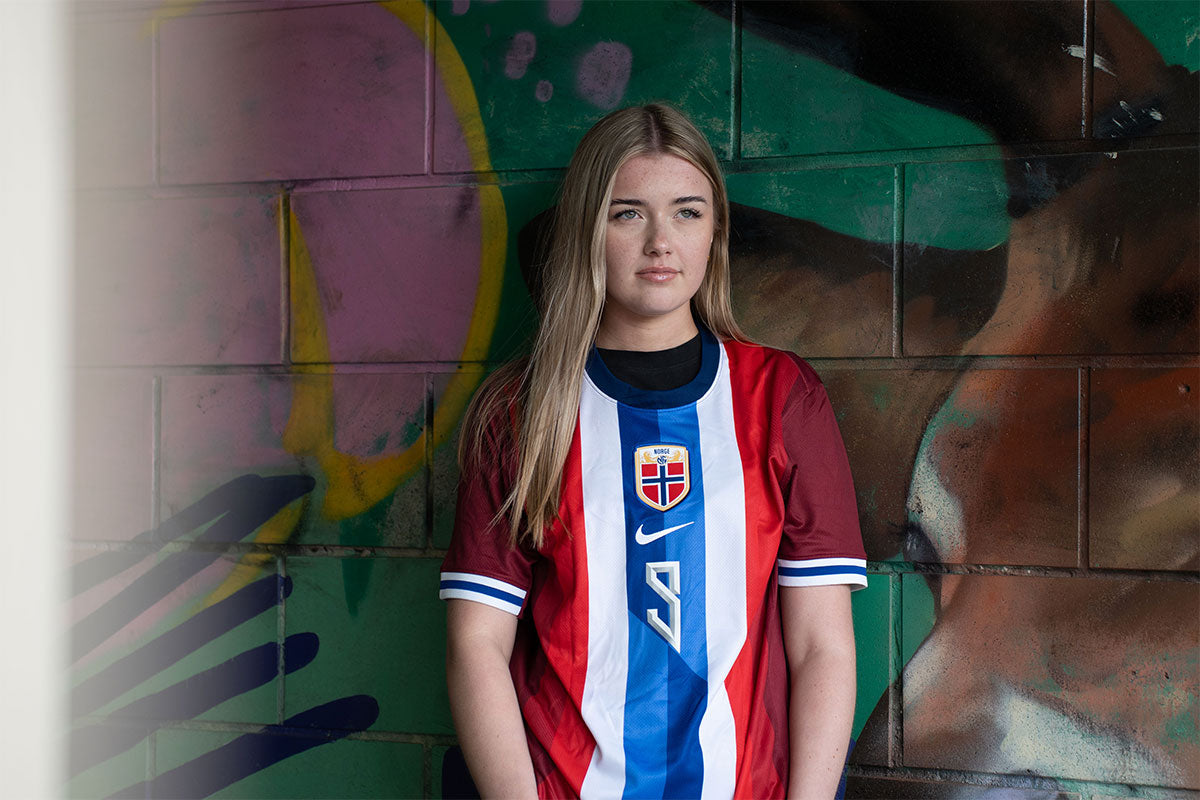
The tournament's kits are more ambitious, more culturally rooted and better made than the shirts they are measured against. What they cannot manufacture is the accident of scarcity and the passage of time, and those are what turned an ordinary yellow shirt from 1970 into the most famous garment in football. Spain's winning red will get there, because winners always do. Argentina's gradient may, on the strength of design and Messi's farewell. Most of the rest will not, and neither did most of the shirts from 1990.
That is worth saying plainly, because the survivorship bias in these arguments is enormous. We compare every 2026 shirt against the handful of classics that survived, and forget the hundreds from the same era that nobody kept. Judged against the whole field of 1990 rather than its greatest hits, 2026 wins comfortably. For the ranked view of where individual shirts land, see best World Cup kits ever, and for 2026 alone, the 2026 World Cup kit tier list.
Owning Both
The most enjoyable collections are not loyal to an era. A 2026 shirt next to a nineties one is a more interesting pairing than five shirts from either, because the contrast is where the pleasure is.
The retro football shirts collection is where the older kits surface, and if you are buying vintage anywhere second-hand, how to tell if a retro football shirt is authentic is worth reading first, because fakes in that market are considerably more convincing than those aimed at current kits. For building a collection with some structure to it, 15 tips to cultivate your football shirt collection covers the practicalities.
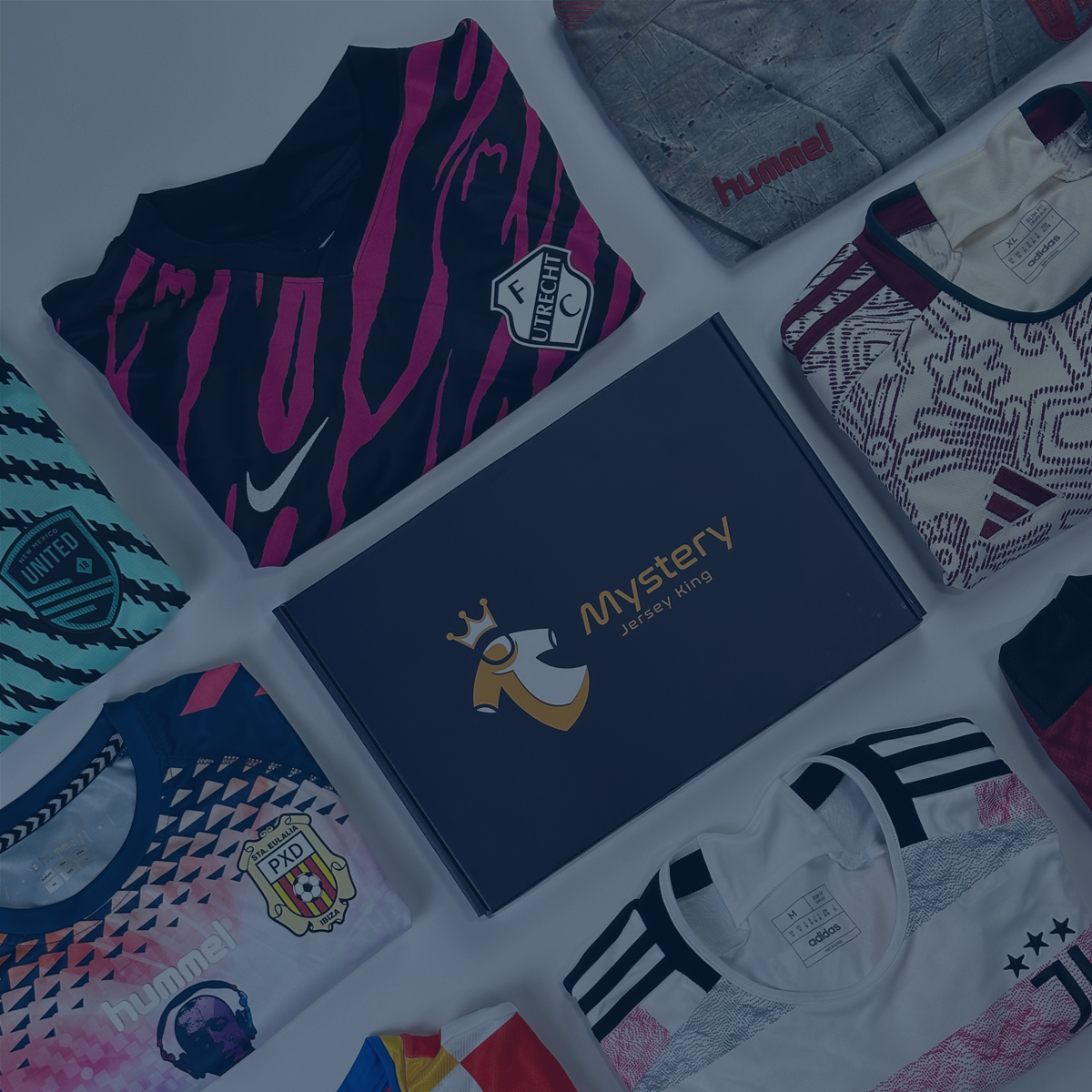
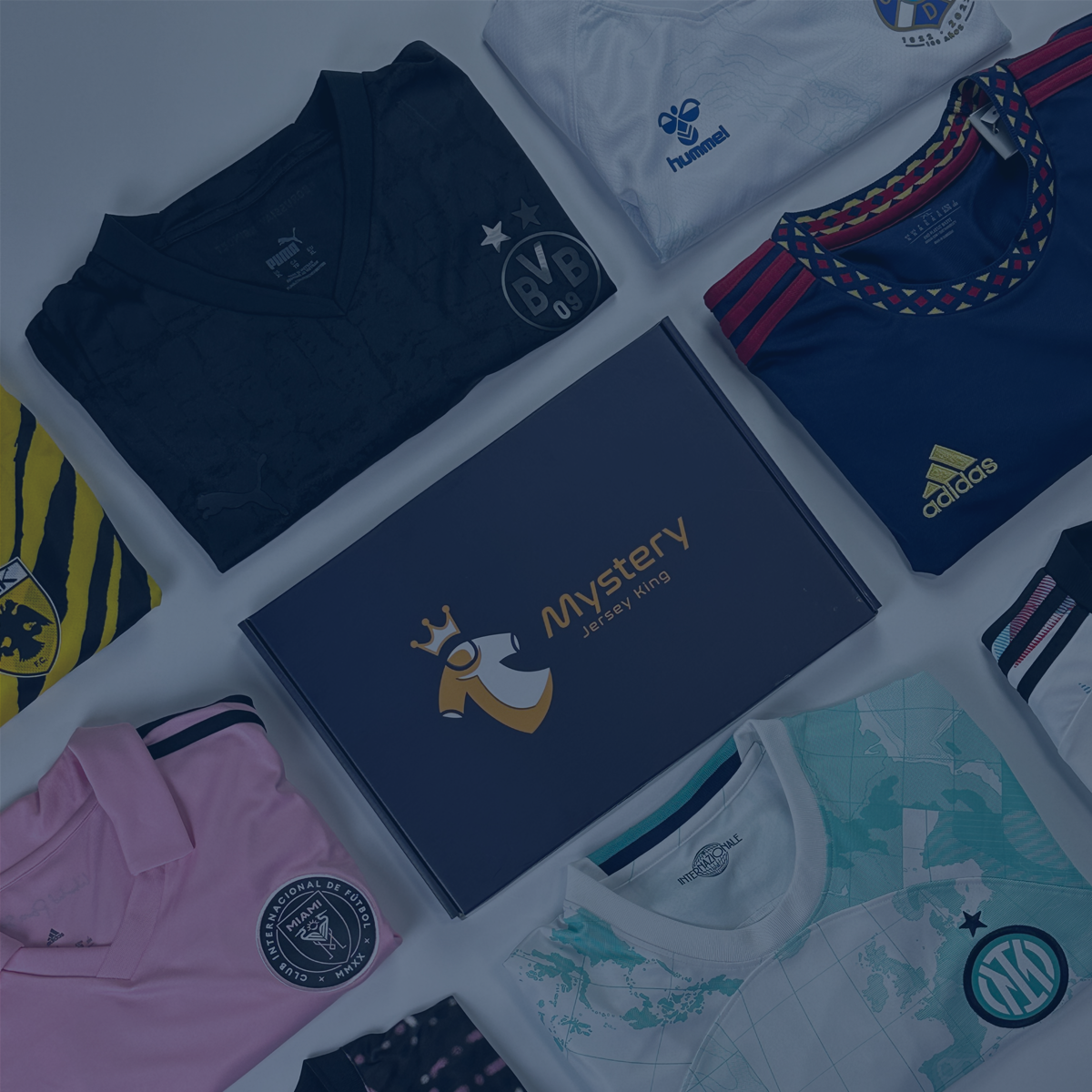
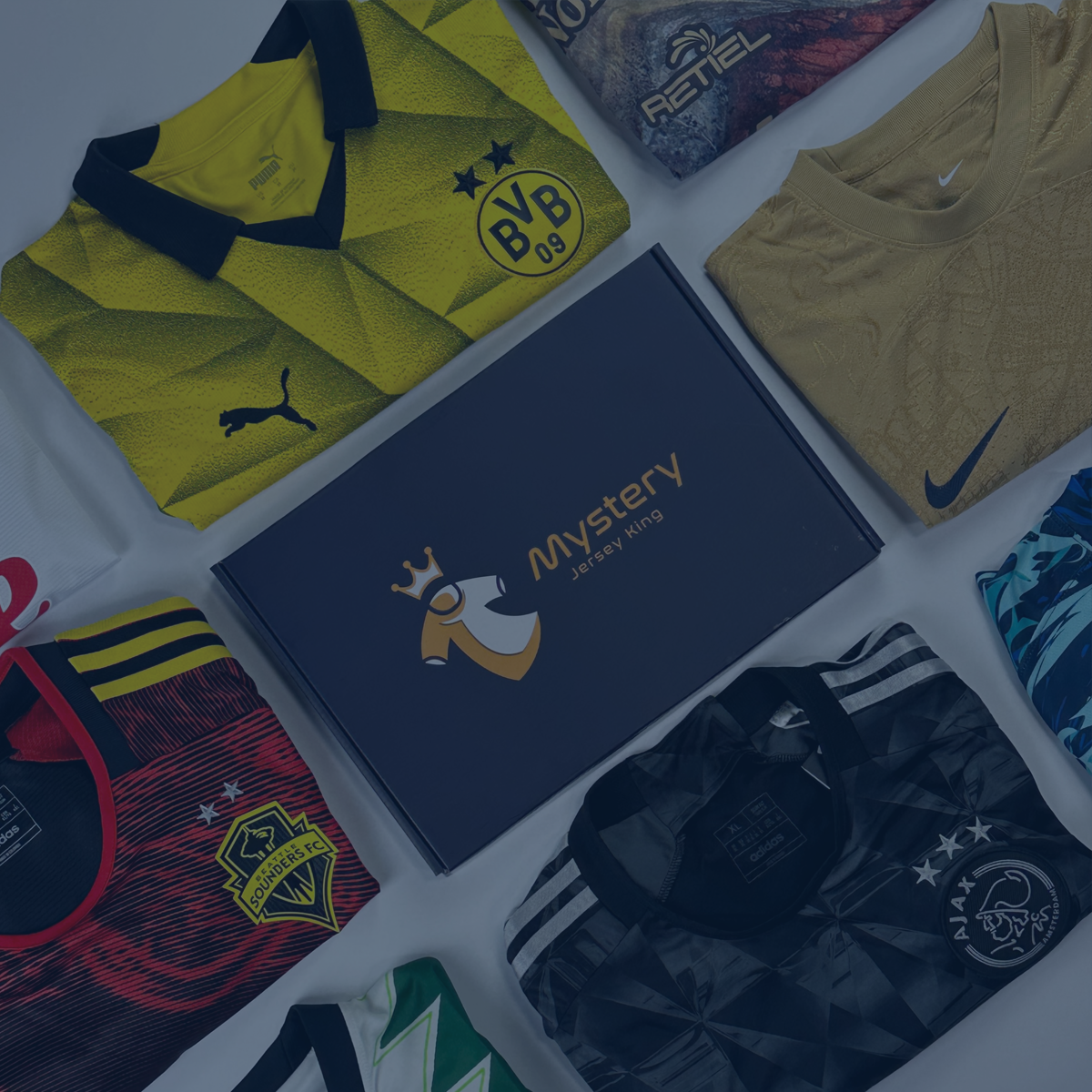
And if you would rather not choose an era at all, an MJK mystery box sends one genuine football shirt without you knowing which one is coming: any club, any nation, any era, drawn from a supply network spanning more than 50 leagues and 53 countries. Given that the argument of this whole post is that nobody can tell in advance which shirts will matter, there is a certain honesty to letting the box decide.

As seen on BBC Dragons' Den. Co-founder Alex Street pitched Mystery Jersey King solo on Series 22, and Sara Davies MBE invested £50,000 for 15%. Read the full story here.
Related reads
Frequently Asked Questions
Are modern football shirts worse than retro ones?
No, they are considerably better made. Modern shirts use engineered performance fabrics with better fit, finish and durability than anything produced before roughly 2005. What retro shirts have instead is scarcity, time and memory, which are the things people usually mean when they say old kits were better.
Why were 1990s football shirts so distinctive?
Printing and fabric technology advanced rapidly at the start of the decade, so manufacturers could suddenly put almost anything on a shirt, and for a while nobody applied much restraint. The results were inconsistent, but the failures were interesting failures, and those age better than safe successes.
What was the template era in football kit design?
Through the 2000s and much of the 2010s, manufacturers applied a single base design across many national teams, changing only the colours and the badge. The shirts were competently made but largely anonymous, which is the main reason the argument that modern kits are worse gained traction.
How do the 2026 World Cup kits compare to the classics?
2026 produced a deeper and more culturally specific field than any previous tournament, drawing on Aztec iconography, Amazigh patterns, Buenos Aires street art and Korean symbolism, and it delivered the first bespoke goalkeeper kits. What it cannot yet have is scarcity and time, which are what turned a handful of older shirts into classics.
Why are old football shirts rarer than modern ones?
Because people threw them away. Nobody was preserving a 1990 kit a few years later; it was simply an out-of-date shirt. Modern kits are bought by people who know they are collecting and are often kept carefully, sometimes with tags intact, so they will never reach the same scarcity.
Will any 2026 shirts become classics?
Spain's winning red almost certainly will, because winners' shirts reliably do. Argentina's three-tone gradient has a strong case on design and its link to Messi's final World Cup. Most of the rest will not, but that is normal: most shirts from the 1990s did not become classics either, and we tend to compare against that era's survivors rather than its full field.
How does a mystery football shirt box work?
You pick your size, and Mystery Jersey King picks the shirt. One genuine football shirt arrives without you knowing which one is coming: any club, any nation, any era, drawn from a supply network spanning more than 50 leagues and 53 countries. MJK has shipped over 100,000 orders and is rated 4.7 out of 5 from more than 1,000 reviews.
Mystery Jersey King
Any Club. Any Nation. Any Era.
The best collections are not loyal to a decade. Every MJK box puts one genuine football shirt through your door without you knowing which one is coming, and the contrast is where the pleasure is.
100,000+ orders shipped. Rated 4.7/5 from 1,000+ reviews. Shipping to 53 countries. As seen on BBC Dragons' Den.


Leave a comment
This site is protected by hCaptcha and the hCaptcha Privacy Policy and Terms of Service apply.