
Last updated: 20 July 2026, following the final. This ranking is now the completed record of the tournament.
The short version
The 2026 World Cup produced one of the strongest sets of kits in the tournament's history, and it was won by Spain, whose red and gold pinstripes are now the shirt that lifted the trophy. On pure design, Argentina's three-tone gradient home leads our S-tier, alongside South Korea's hidden-tiger home and France's Statue of Liberty away. At the other end, the Saudi Arabia goalkeeper kit was voted the worst-rated of the tournament.
In this article
- The final word: how the tournament settled the ranking
- How the tier list works
- S-tier: the best shirts of the tournament
- A-tier: excellent shirts
- B-tier: solid and likeable
- C-tier: forgettable
- D-tier: the misfires
- A word on the goalkeeper kits
- How the football rewrote the ranking
- How to get a shirt from the tournament
- Frequently asked questions
The Final Word: How the Tournament Settled the Ranking
The 2026 World Cup is complete, and it was won by Spain, who beat Argentina 1-0 after extra time in the final at MetLife Stadium. That result gives this ranking its permanent shape. Spain's red home, with its thin yellow pinstripes drawn from the flag, is now the shirt that won the World Cup, and that is a status no design ranking can outrank. It was a fine kit in the upper tiers all summer, restrained where others reached for novelty. It is now the one that history keeps. We have written about it in full in the shirt that won the 2026 World Cup.
On pure design, though, the ranking holds. Argentina's gradient home remains the best-looking shirt of the tournament, and losing a final does not change that. If anything it gained: Lionel Messi scored eight goals and broke the all-time World Cup scoring record wearing it, in what is almost certainly his last World Cup. England's white with the gold star was the summer's biggest climber, carried to the semi-finals by a Jude Bellingham brace against Norway, and France's Statue of Liberty away stayed high throughout.
And the fallers tell their own story. Brazil's yellow, the most famous shirt in football, was beaten by Norway. Germany's white, the last kit Adidas will ever make for them, went out before the quarter-finals. It was the first time in World Cup history that neither Brazil nor Germany reached the last eight. Two of the tournament's finest designs, South Korea's hidden tiger and Japan's rainbow-pinstriped away, never made it out of the group stage. That is the tension every kit ranking lives with: design earns a shirt its tier, but the football decides which shirts anyone still talks about a decade later.

How the Tier List Works
The tiers are based on design: the strength of the concept, the quality of the execution, and how the shirt looks both on the pitch and off it. S-tier is for shirts that stand among the best of any recent tournament. A-tier shirts are excellent. B-tier shirts are solid without being remarkable. C-tier shirts are forgettable, and D-tier covers the genuine misfires.
Design is not the whole story, though, and any honest ranking admits it. A shirt worn through a famous run takes on a weight that no design brief can manufacture. Morocco's red gained its meaning from a semi-final in 2022. Scotland's navy became the shirt of a first World Cup win in 28 years the moment they beat Haiti. So this ranking reads in two directions at once: what the shirt looks like, and what it came to mean.
S-Tier: the Best Shirts of the Tournament
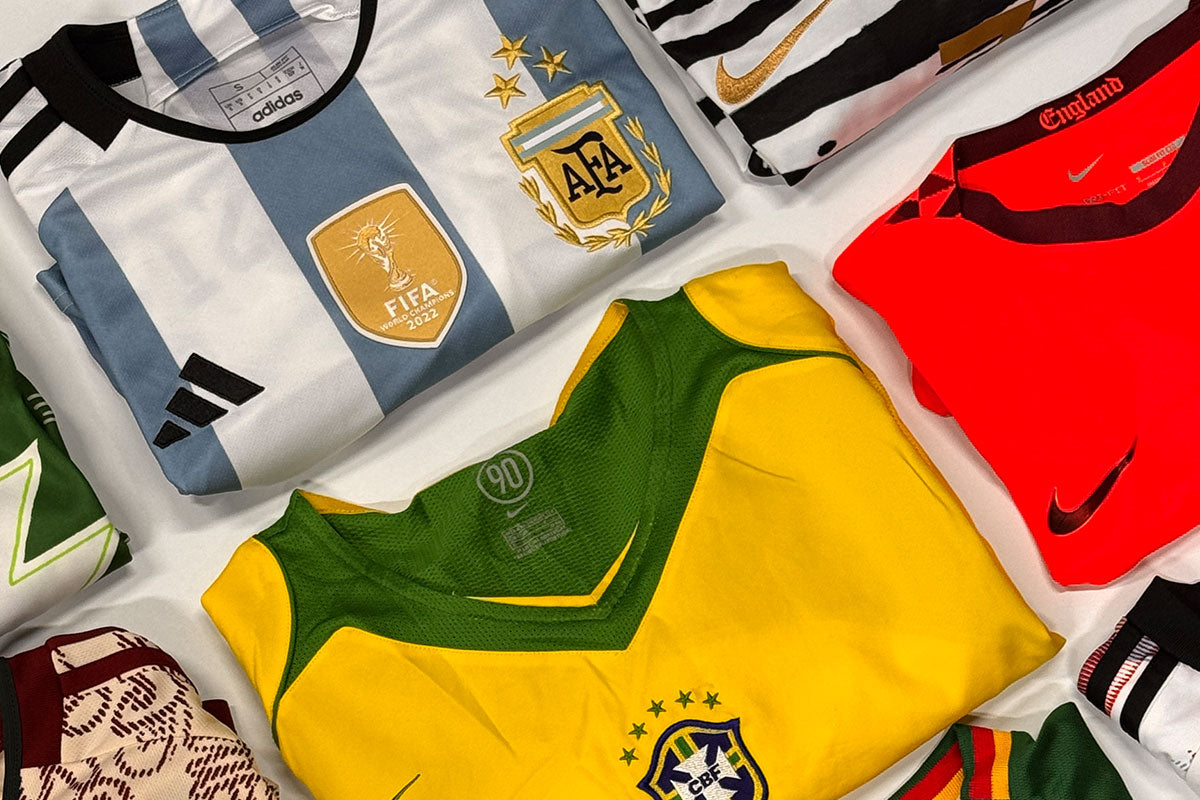
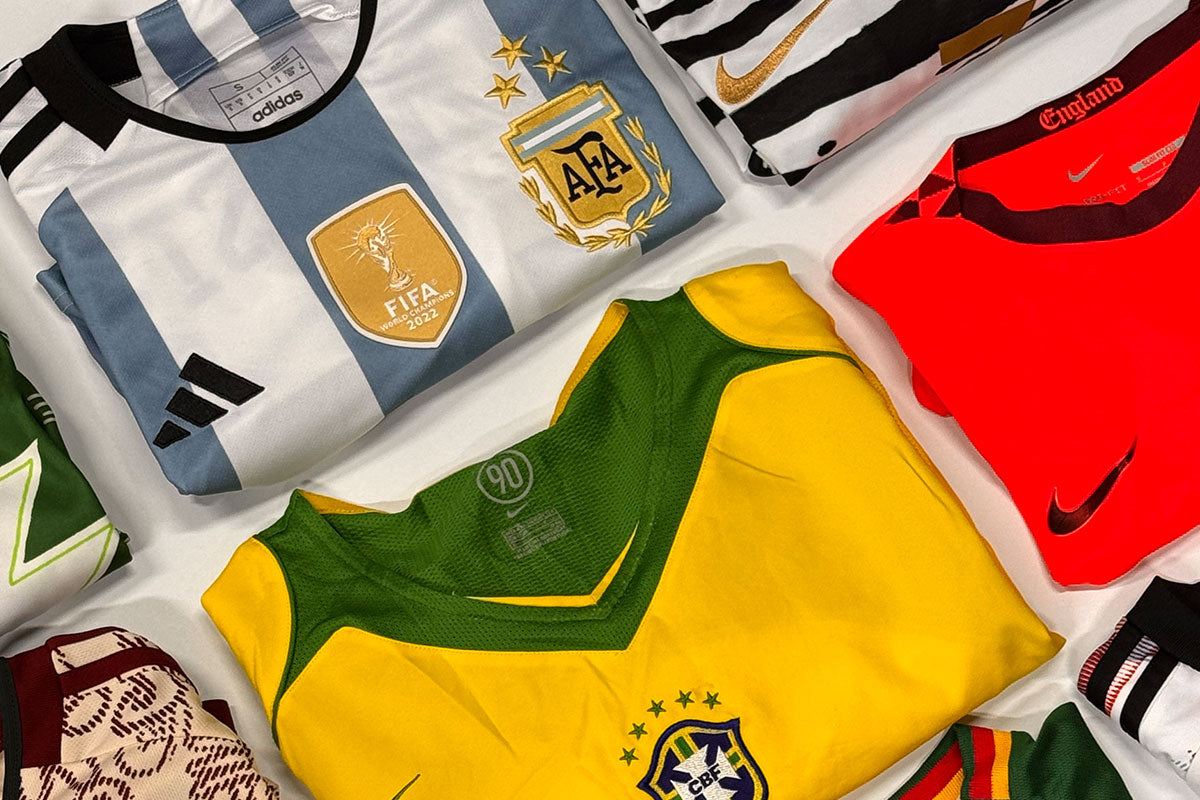
Argentina home, the three-tone gradient. The consensus best shirt of 2026. It takes the traditional sky-blue and white stripes and renders them as a subtle three-tone gradient, one shade for each of Argentina's World Cup wins in 1978, 1986 and 2022. A gold crest marks the defending champions, and a small "1896" at the neck nods to the founding of the Argentine Football Association. Elegant, historically literate, and worn by Messi in what is almost certainly his final World Cup.
South Korea home, the hidden tiger. The most talked-about design of the tournament. At a glance it is a clean red shirt. Up close, a white tiger, the symbol of Korean football, emerges in tonal camouflage across the fabric. It is the kind of detail that rewards a second look, and it is the reason this shirt stays in S-tier despite South Korea going out at the group stage. Great design does not need a trophy to justify itself.
France away, the Statue of Liberty. The most conceptually ambitious shirt of the tournament. A glacier-green away kit honouring the monument France gifted to the host nation, it is genuine storytelling in kit form, and it is worn by one of the strongest sides in the competition.
A-Tier: Excellent Shirts
England home. The classic white, navy and red trim, a knit pattern Nike describes as the fabric of the nation, and the single gold star for 1966. It is a shirt that needs no reinvention, and a run to the semi-finals has done more for its standing than any design tweak could.
Mexico home. Vibrant green covered in geometric patterning drawn from Aztec eagle-warrior armour and the Piedra del Sol. Culturally rich, visually loud, and never messy. It opened the tournament at the Estadio Azteca, which is about as fitting as a shirt debut gets.
Germany home. A clean white shirt with a tricolour diamond pattern echoing the 1990 and 2014 winners, and the last Germany kit Adidas will ever produce. Brazil home, the deeper Yellow Canary, is a deliberate tribute to the 1970 side. Curacao away, a pastel design from the smallest nation ever to qualify, won more fan votes than almost any other away kit. Spain and Morocco, the latter patterned with Amazigh motifs, complete a deep A-tier.

B-Tier: Solid and Likeable
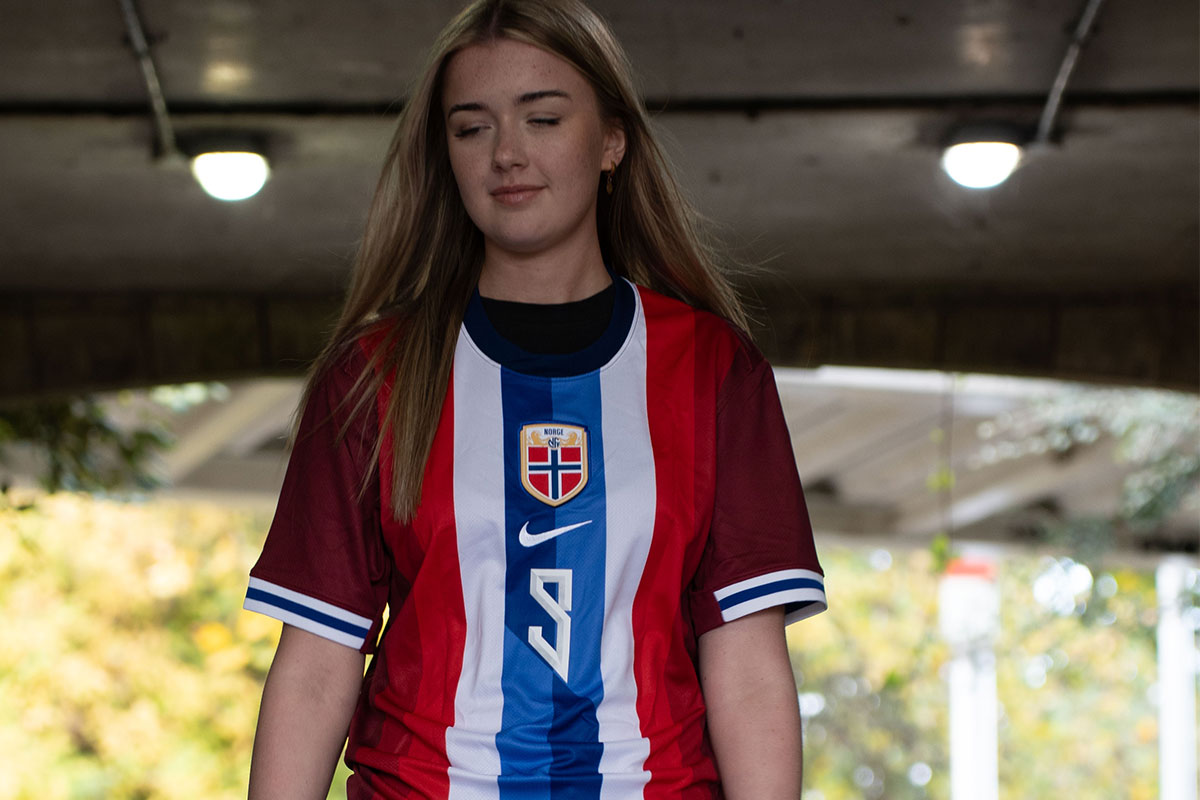
The largest tier, as it usually is. These are the dependable, well-made kits that look smart without demanding attention. The Netherlands, Portugal, Belgium, whose Magritte-inspired away nudges higher, Japan's home, Senegal, Uruguay and Norway all sit here. Norway's is worth a mention: a clean, understated shirt that will be remembered chiefly because Erling Haaland wore it while knocking Brazil out of a World Cup, which is a fair trade for any kit.
These are shirts a fan is happy to wear and a collector is glad to own. They are not the headline acts, but a B-tier shirt on a famous run climbs quickly, and several did exactly that.
C-Tier: Forgettable
Perfectly functional shirts that leave no impression. This tier is mostly template-based kits and conservative designs that missed the chance to say anything. They are not bad. They are anonymous, the shirts you would struggle to pick out of a line-up. In a tournament where the best designs told a story, the C-tier shirts stayed silent.
D-Tier: the Misfires
The genuine disappointments, and mercifully few of them. The standout, unfortunately for Saudi Arabia, is their goalkeeper kit, voted the worst-rated of the entire tournament in fan polling. Beyond that, the weakest outfield shirts paired a dull base with poor execution and missed a bar that most of the field cleared comfortably. That D-tier is this thin says a great deal about how high the standard of kit design has become.
A Word on the Goalkeeper Kits
2026 was the first World Cup where goalkeepers received bespoke, nation-specific designs rather than a generic template, and the difference was immediate. Nigeria's pink-and-purple keeper shirt set the benchmark, with France's Statue of Liberty keeper and England's lion-graphic shirt close behind.
The headline is simple: keeper shirts have never been better, and the strong ones are among the most collectable in the game. For years they were an afterthought. They are now some of the boldest designs a manufacturer produces, and collectors have noticed.
How the Football Rewrote the Ranking
This is the part of a tier list that a launch-day review can never get right. Shirts do not stay where you put them, because football keeps intervening.
Scotland's navy is the clearest example. On design it is a restrained, heritage-faithful shirt, pleasant rather than remarkable. Then Scotland won their first World Cup match in 28 years wearing it, and it became something a design ranking cannot measure. Cape Verde's kit was unremarkable until one of the smallest nations ever to qualify reached their first ever World Cup. Norway's plain shirt is now the shirt that beat Brazil.
It cuts the other way too. Brazil's beautiful 1970 tribute went home early. Germany's farewell Adidas kit went out before the quarter-finals. Two of the best-designed shirts of the tournament, South Korea's and Japan's, never made it out of the group stage. Design earns a shirt its tier. The football decides whether anyone remembers it.
The shirts people ask us for after a tournament are almost never the ones they were asking for before it. A kit nobody rated in May becomes the one everybody wants in July, because of one night, one goal, one save. You cannot design that in.
- Jamie King, co-founder, Mystery Jersey King
How to Get a Shirt From the Tournament
If this ranking has you wanting a shirt, there are two honest routes. If you already know exactly which kit you want, buy that one. Choosing deliberately is a perfectly good way to collect, and specialist retailers carry most of the shirts named above.
The other route is to let the shirt choose you. An MJK mystery box sends one genuine football shirt without you knowing which one is coming, any club, any nation, any era, drawn from a supply network spanning more than 50 leagues and 53 countries. That is a different kind of pleasure, and it is closer to how this tier list actually got written. Half the shirts that ended up mattering in 2026 were ones nobody was thinking about in May.
For the classic kits of past tournaments, the shirts these designs are quoting from, the retro football shirts collection is the place to start.

As seen on BBC Dragons' Den. Co-founder Alex Street pitched Mystery Jersey King solo on Series 22, and Sara Davies MBE invested £50,000 for 15%. Read the full story here.
Related reads
Frequently Asked Questions
What is the best kit of the 2026 World Cup?
On design, the consensus best shirt of the 2026 World Cup is Argentina's home: a subtle three-tone gradient on the traditional sky-blue and white, with one shade for each of Argentina's World Cup wins in 1978, 1986 and 2022. It heads an S-tier that also includes South Korea's hidden-tiger home and France's Statue of Liberty away.
What is the worst kit of the 2026 World Cup?
In fan polling, the Saudi Arabia goalkeeper kit was voted the worst-rated of the 2026 World Cup. Among outfield shirts, the weakest paired a dull base with conservative execution. The D-tier is unusually thin for a World Cup, which reflects how high the overall standard of kit design has become.
Why is the South Korea 2026 shirt special?
The South Korea home shirt hides a white tiger, the symbol of Korean football, in tonal camouflage across the fabric. At a glance it reads as a clean red shirt, but up close the tiger emerges. It is widely regarded as one of the cleverest kit designs of recent years, and it holds its S-tier place regardless of how far the team went.
Were the 2026 World Cup goalkeeper kits any good?
2026 was the first World Cup where goalkeepers received bespoke, nation-specific designs rather than a generic template, and the difference was obvious. Nigeria's pink-and-purple keeper shirt set the benchmark, with France's and England's close behind. The strongest goalkeeper shirts are now among the most collectable in the game.
Does a team's performance change where its shirt ranks?
It changes what the shirt means, which is not quite the same as how it looks. Scotland's navy is a restrained design, but it became the shirt of their first World Cup win in 28 years. Norway's plain kit is now the shirt that knocked Brazil out. A ranking that ignores this misses most of why people actually want a particular shirt.
How many different shirts were at the 2026 World Cup?
With 48 nations each producing a home and away shirt, there were more than 96 different kits, rising past 100 once goalkeeper and third kits are counted. That is the largest set of tournament shirts ever produced, a consequence of the expanded 48-team format, and part of why the field of designs was so deep.
How does a mystery football shirt box work?
You pick your size, and Mystery Jersey King picks the shirt. One genuine football shirt arrives without you knowing which one is coming: any club, any nation, any era, drawn from a supply network spanning more than 50 leagues and 53 countries. MJK has shipped over 100,000 orders and is rated 4.7 out of 5 from more than 1,000 reviews. You can browse the mystery box collection to start.
Mystery Jersey King
You've Ranked Every Kit. Now Let Us Pick One For You.
The shirts that ended up mattering in 2026 were mostly the ones nobody chose in May. Every MJK box puts one genuine football shirt through your door without you knowing which one is coming: any club, any nation, any era.
100,000+ orders shipped. Rated 4.7/5 from 1,000+ reviews. Shipping to 53 countries. As seen on BBC Dragons' Den.


Leave a comment
This site is protected by hCaptcha and the hCaptcha Privacy Policy and Terms of Service apply.