Updated 14 July: how our picks fared
We Said Norway. Norway Knocked Brazil Out.
We published this in May, before a ball was kicked. Our number one dark horse was Norway, on the strength of Haaland and a 28-year wait. They beat Brazil 2-1 to reach the quarter-finals, removing the five-time champions from the tournament, and only went out 2-1 to an England side now in the semi-finals.
- Norway (pick 1): beat Brazil 2-1, reached the quarter-finals, lost 2-1 to England
- Morocco (pick 2): reached the quarter-finals, lost 2-0 to France
- Egypt (pick 5): reached the knockouts, lost 3-2 to Argentina in a tight one
- USA (pick 8): reached the knockouts, lost 4-1 to Belgium
Two of our eight picks reached the last eight. Neither Brazil nor Germany did. The original piece, exactly as published in May, follows below.
In this article
- Why dark horses matter more in 2026 than ever before
- 1. Norway - Haaland and a 28-year wait
- 2. Morocco - the semi-finalists are back
- 3. Japan - the tactical surprise
- 4. Senegal - AFCON champions with a point to prove
- 5. Egypt - Salah's first and probably last World Cup
- 6. Croatia - Modric's farewell tour
- 7. Ecuador - the unglamorous wall
- 8. USA - the home pressure cooker
- The dark horse shirts worth following
- Frequently asked questions
Every World Cup has a dark horse. Morocco at Qatar 2022, South Korea at 2002, Cameroon at 1990, Bulgaria at 1994. The teams that arrive with no expectation and end up rewriting the tournament narrative are part of what makes the World Cup the most watched competition in sport. For 2026, with 48 teams competing for the first time and a new round of 32 widening the bracket, the chances of a serious upset run have never been higher. This post ranks the 8 nations most likely to cause real damage to favoured opposition in North America this summer.
The criteria are simple. A team is a dark horse if it has either a generational individual talent that can swing knockout matches, a clear tactical advantage that previous tournaments have exposed, or enough recent form against top-30 opposition to suggest the elite teams cannot simply expect a routine win. The eight teams below all meet at least two of those three criteria. None of them are favourites. All of them could go further than the bookmakers expect.
Why Dark Horses Matter More in 2026 Than Ever Before
The expanded 48-team format changes the structural conditions for upsets. Previously, a 32-team World Cup gave only 16 teams a knockout spot, with the top two from each of 8 groups progressing. The 2026 format gives 32 teams a knockout spot: the top two from each of 12 groups plus the eight best third-placed teams. That means a dark horse no longer has to win their group or even finish second to advance. Finishing third in a manageable group, with two reasonable group-stage results, is enough to reach the round of 32. The path to the knockouts is wider than at any previous tournament.
The new round of 32 also adds an extra knockout match before the round of 16. Historically, the round of 16 is where dark horses get caught: one underdog run can be ended by a clinical performance from a serious team in a single match. The round of 32 widens the entry point to knockout football, meaning dark horses now have two opportunities to defy expectation before they reach the genuine elite. Statistically, that doubles the chance of a memorable upset run reaching the final eight or further.

1. Norway - Haaland and a 28-Year Wait
Norway are the dark horse pick of the tournament for one reason above all: Erling Haaland. The Manchester City striker has won everything in European club football, with goal totals that put him on a statistical level no contemporary forward can match. He has not yet had the chance to translate that into international football because Norway have not qualified for a major tournament during his career. 2026 is the first World Cup he has ever played in, and the appetite to make it count is enormous.
Behind Haaland sits a midfield led by Martin Ødegaard, the Arsenal captain whose vision and creativity transformed the North London club into a genuine title contender. Sander Berge adds defensive cover, and the squad as a whole has matured significantly since their last serious qualifying campaign. Norway's qualification was dominant, with two wins over Italy among the highlights of a campaign that announced their return to elite international competition.
The challenge is Group I. Drawn against France, Senegal and Iraq, Norway are in what most analysts have called the "Group of Death". France are one of the title favourites. Senegal are reigning AFCON contenders. Iraq are the dangerous outsiders. Norway will need either two strong results from those fixtures or to grind out one win and a credible third-place finish to advance. If they get out of the group, the new round of 32 plus Haaland's individual presence give them a genuine chance to push deep into the bracket.
2. Morocco - the Semi-Finalists Are Back
Morocco are the most successful dark horse of recent World Cup history. Their run to the semi-finals at Qatar 2022, beating Spain and Portugal on the way, is the high-water mark for African football at a World Cup and one of the great underdog stories in any modern football tournament. They arrive in 2026 carrying the burden of expectation that did not exist in Qatar: nobody can claim Morocco are a surprise any more.
The squad has matured rather than aged. Achraf Hakimi remains one of the best attacking full-backs in the world. Yassine Bounou is one of the most reliable goalkeepers in international football. Sofyan Amrabat anchors the midfield with the same defensive intensity that suffocated Spain and Portugal in 2022. The tactical structure that produced the 2022 run, low block, fast transitions, set-piece danger, is a system that travels well to North American conditions.
Group C, with Brazil, Scotland and Haiti, gives Morocco a serious test on the opening matchday but realistic three-point opportunities elsewhere. A second-place finish behind Brazil, or even a top-place finish if Morocco repeat their 2022 form against Brazil, sets up a knockout path that could mirror 2022. The question is whether they can find the goalscoring volume their 2022 run lacked, where 1-0 wins and 0-0 draws on penalties carried them through.
3. Japan - the Tactical Surprise
Japan are one of the dark horses most consistently picked by analysts who watch elite international football closely. Their tactical discipline under Hajime Moriyasu has produced friendly wins against Germany, Brazil and Spain in the build-up to the tournament. The high-press, quick-passing football model has matured significantly since their group-stage exits at previous tournaments, and a new generation of attacking talent led by Kaoru Mitoma and Takefusa Kubo has given the squad genuine creative threat to complement the tactical work-rate.
The squad blends Premier League and European club experience with relentless work rate. Wataru Endo provides the defensive midfield base that allows Mitoma and Kubo to attack in space. Daichi Kamada offers creativity from advanced positions. The defensive structure has been tightened since the 2022 round of 16 elimination on penalties to Croatia, and Japan's goal-difference numbers from World Cup qualification put them comfortably among the strongest qualifiers from any confederation.
Japan are in Group F, with the Netherlands the main obstacle to a top-two finish. A win against any non-Netherlands group opponent should secure a knockout place, with Japan's tactical discipline making them a difficult round-of-32 opponent for any seeded team that draws them.
4. Senegal - AFCON Champions With a Point to Prove
Senegal arrive at the 2026 World Cup as champions of the 2025 Africa Cup of Nations, although CAF subsequently stripped Senegal of the title and awarded it to Morocco following a disputed final. The political complexity around the title does not change the underlying football fact: Senegal beat Egypt and reached the final by playing as well as any African team across the qualifying cycle. Sadio Mane remains the leader of an experienced squad that includes Kalidou Koulibaly, Idrissa Gueye, Pape Matar Sarr, Nicolas Jackson and Ismaila Sarr.
Senegal's previous World Cup runs include a quarter-final at their debut tournament in 2002 and a round-of-16 exit to England in 2022. They have the institutional knowledge of how to navigate a knockout tournament. The challenge is Group I, the Group of Death, with France and Norway both threats to take top-two spots. Senegal's path to the knockouts may depend on results in their head-to-head with Norway on 22 June.

5. Egypt - Salah's First and Probably Last World Cup
The 2026 World Cup is Mohamed Salah's first World Cup, despite the fact that he is now in the final phase of one of the most decorated club careers in modern Premier League history. Egypt have never won a knockout match at a World Cup across their three previous appearances, but the expanded format and the relative weakness of Group G create real conditions for a Pharaohs run that defies all of that history. Egypt open against Belgium on 16 June, with New Zealand and Iran completing the group.
Salah's individual presence remains the single biggest variable. The 33-year-old Liverpool forward is the most consistently dangerous attacking player in African football and one of the few World Cup forwards whose individual quality can win a knockout match by itself. The supporting squad has improved since the 2022 qualification heartbreak, and the 48-team format gives Egypt a realistic route to the knockouts even if they finish third in Group G.
Egypt also benefit from the emotional dimension. This is, by all reasonable measures, the last World Cup of Salah's career. The 30,000 Egyptian fans expected to travel to North America are wholly invested in giving him a tournament to remember, and the team has played with an additional intensity in qualification fixtures throughout the cycle. The seven-time AFCON champions know how to grind through knockout football. The new format may give them just enough room to do it at World Cup level.
6. Croatia - Modric's Farewell Tour
Croatia made the 2018 World Cup final, the 2022 World Cup semi-finals, and arrive in 2026 with the same midfield core that has carried them through both campaigns. Luka Modric, now 40, is widely understood to be playing his final World Cup. Mateo Kovacic remains an elite passer. The back five is well-drilled. The squad is older than ideal for a 39-day tournament in North American summer conditions, but the institutional knowledge of how to grind through knockouts is unmatched outside the top six seeded nations.
Croatia open against England in Group L on 17 June, the rematch from the 2018 semi-final that England eventually lost. The Croatia/England head-to-head will set the tone for Group L. The deeper Croatia goes into the tournament, the more the Modric farewell narrative will gather momentum. A quarter-final run for the third consecutive World Cup is realistic. A semi-final or final would be the perfect finish to one of the great international midfield careers.
7. Ecuador - the Unglamorous Wall
Ecuador are the dark horse pick for collectors who watch defensive football. The South Americans produced one of the strongest qualifying campaigns of any CONMEBOL nation, conceding just five goals across 16 qualification matches. The squad is built around Moises Caicedo as the defensive midfield anchor, with Pervis Estupinan and Piero Hincapie providing serious defensive structure behind him. The team draws a lot of games but has not lost since the start of 2025, including 1-1 draws against the Netherlands and Morocco in March 2026 friendlies.
Ecuador's attacking output is the limiting factor. Without a clinical centre forward, they tend to grind out 1-0 wins and 0-0 draws rather than win matches comfortably. But the new 48-team format suits exactly that profile: a team that doesn't lose, that takes its chances when they come, and that can scrape through the third-placed spot if needed. Group E, with Germany the main obstacle to a top-two finish, gives Ecuador a realistic route to the knockouts.
8. USA - the Home Pressure Cooker
The USA at a home World Cup is an unusual dark horse case. They are a host nation rather than an outsider in any commercial sense, but their football credibility internationally remains below the elite tier, and their World Cup history outside hosting the 1994 and 2026 tournaments is modest. The reason they make this list is twofold: Mauricio Pochettino arrived as head coach in 2024 and has transformed the tactical structure, and the home crowd advantage in the 2026 format is significant. USA play all three group-stage matches in the USA (Group D, against Paraguay, Türkiye and Australia), with travel between matches minimised.
Pochettino's USA plays a higher-press, more aggressive transition game than any previous USMNT under any previous coach. Christian Pulisic at his Milan-level form is a genuine attacking threat in transition. The Group D draw is favourable but not easy: Türkiye in particular have a younger generation that could push for the top-two spot. The home crowd, the friendly time zones for the USMNT, the absence of long-haul travel before the knockouts, and Pochettino's tactical system combine to give USA a realistic path to at least the round of 16 and potentially the quarter-finals.
"At MJK we see the dark horse pattern every World Cup. Someone orders a mystery box, pulls out a nation they have no prior connection to, and ends up wearing that shirt through one of the tournament's defining runs. Senegal 2002, South Korea 2002, Morocco 2022. The shirts of the teams that go on these runs become some of the most personally significant pieces in any collection."
- Jamie King, co-founder, Mystery Jersey King
The Dark Horse Shirts Worth Following
Dark horse shirts are some of the most underrated pieces in any collection. The shirts of the teams that overperform at a World Cup tend to become collector items years later, when the run that nobody expected becomes part of the tournament's permanent narrative. Senegal's 2002 home shirt is one of the most undervalued World Cup pieces in the modern era. Morocco's 2022 home is now one of the most consistently requested African national team shirts in MJK's rotation. South Korea's 2002 home is a piece of football design that the team's semi-final run made permanent.
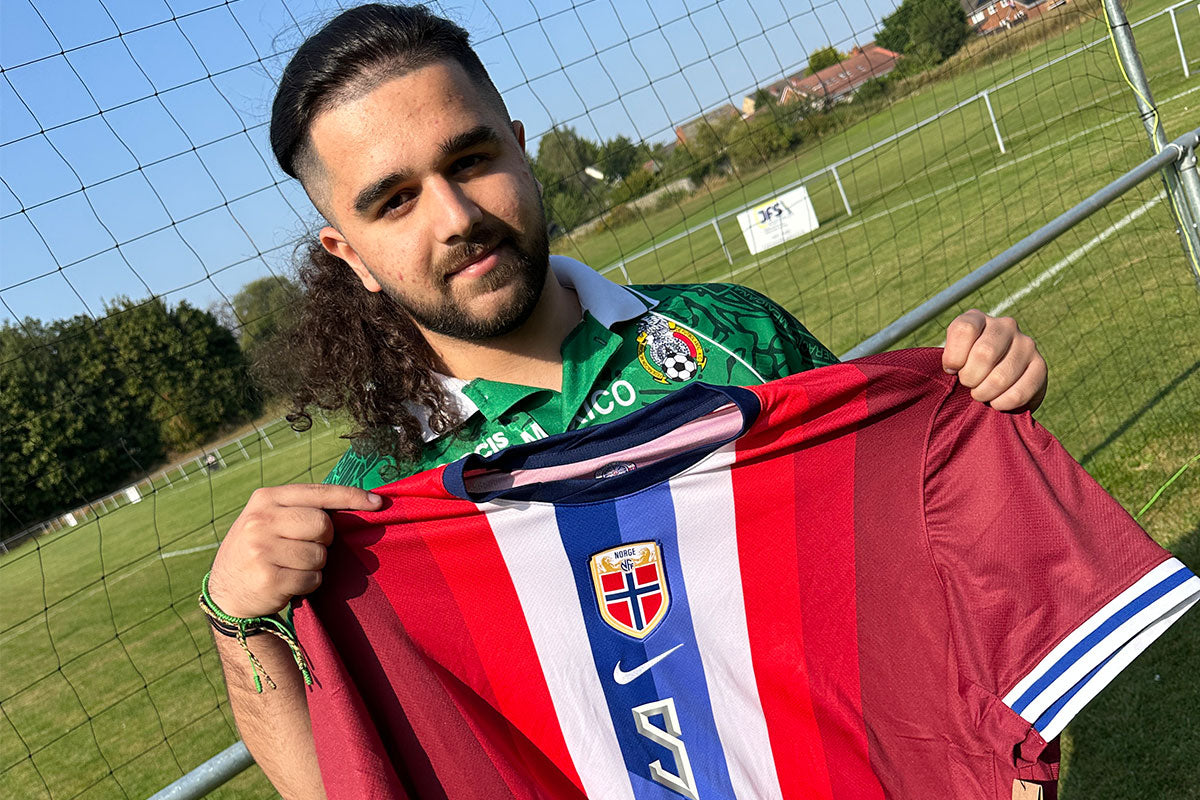
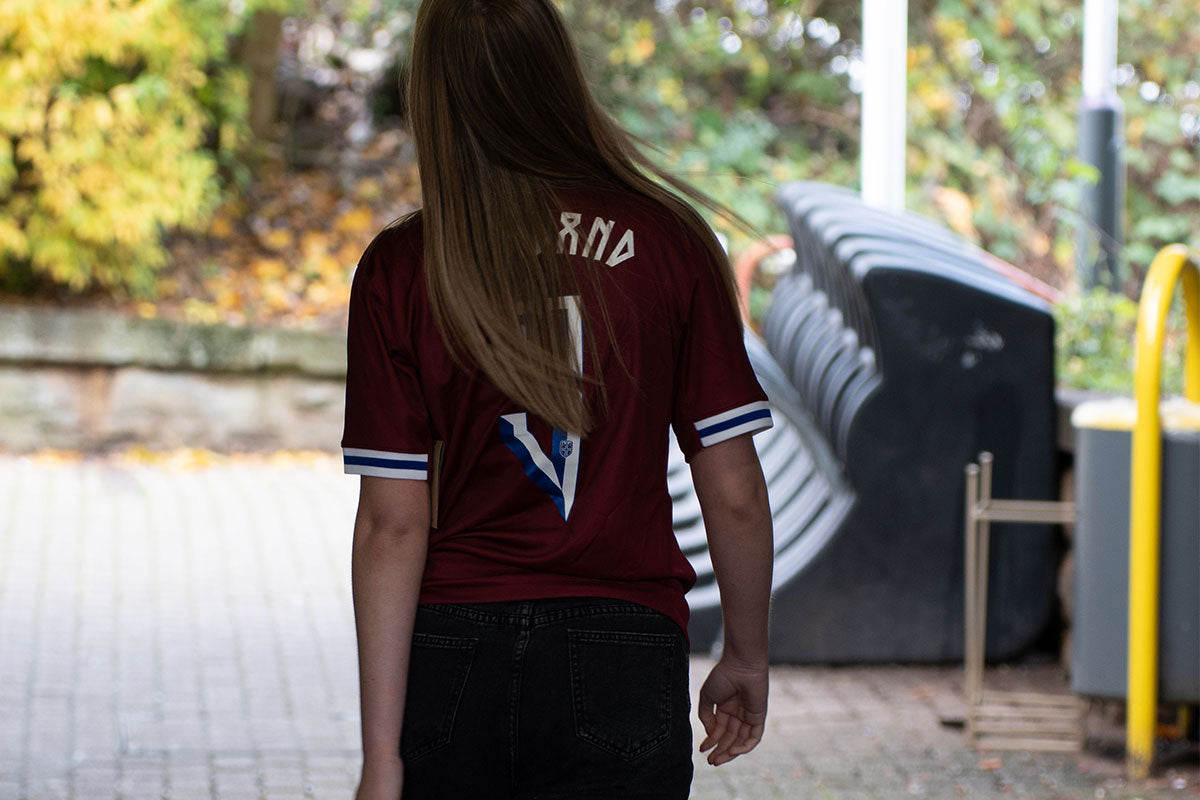
Norway's 2026 home, with the runic pattern detailing referencing Viking heritage, has just joined that lineage. It is the shirt Norway were wearing when they knocked Brazil out of a World Cup, and that is not a sentence anyone expected to write in May. That is exactly how a dark horse shirt becomes a collector's shirt: not through design, but through one night that nobody saw coming.
One MJK customer ordered a mystery box during the 2022 World Cup and pulled out a Morocco home shirt. They had no prior connection to the Atlas Lions. They wore the shirt through Morocco's run to the semi-finals, and ordered a second Morocco shirt from the retro collection six months later. The pattern, where a mystery box creates a connection that a deliberate purchase then completes, is one MJK sees repeatedly through tournament windows.
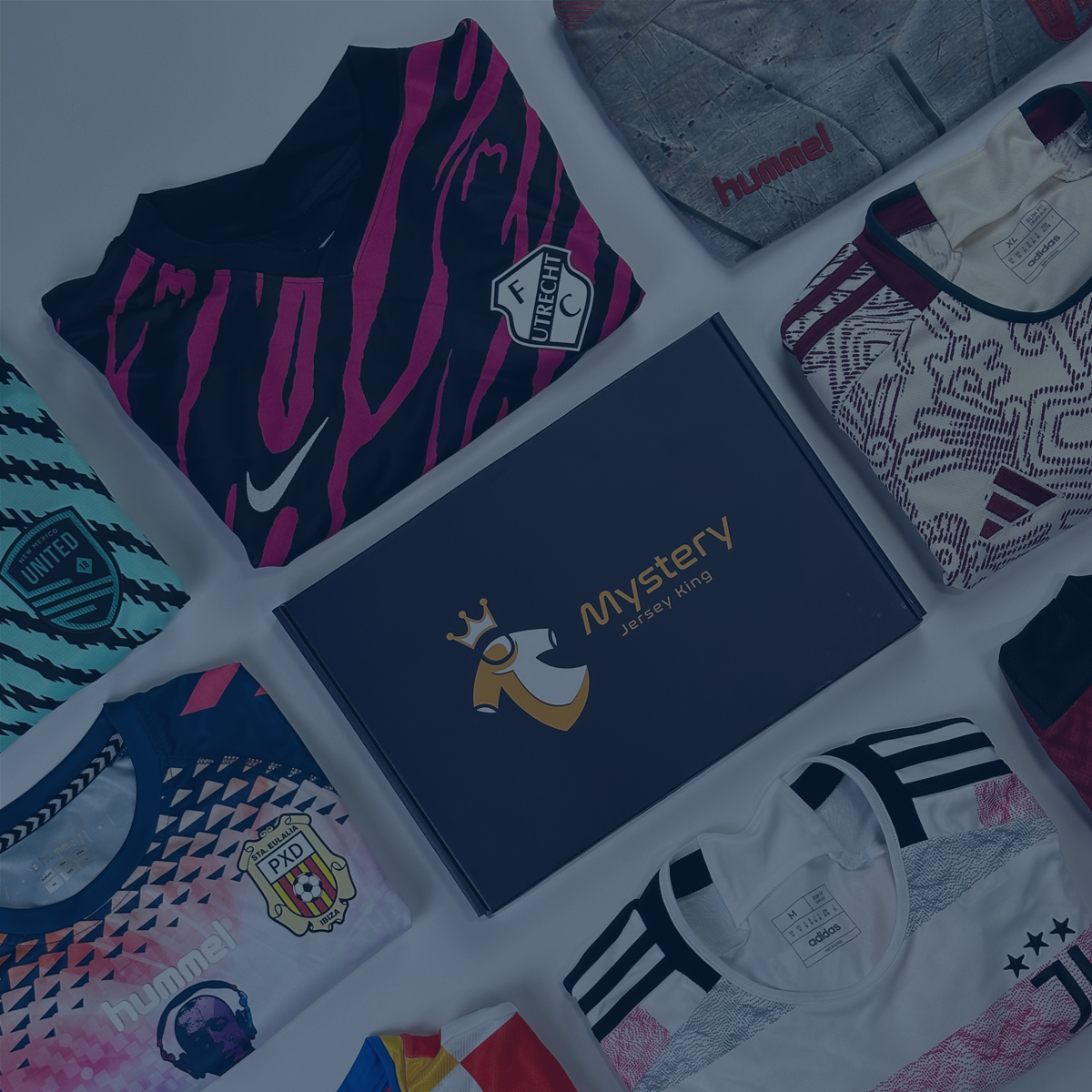
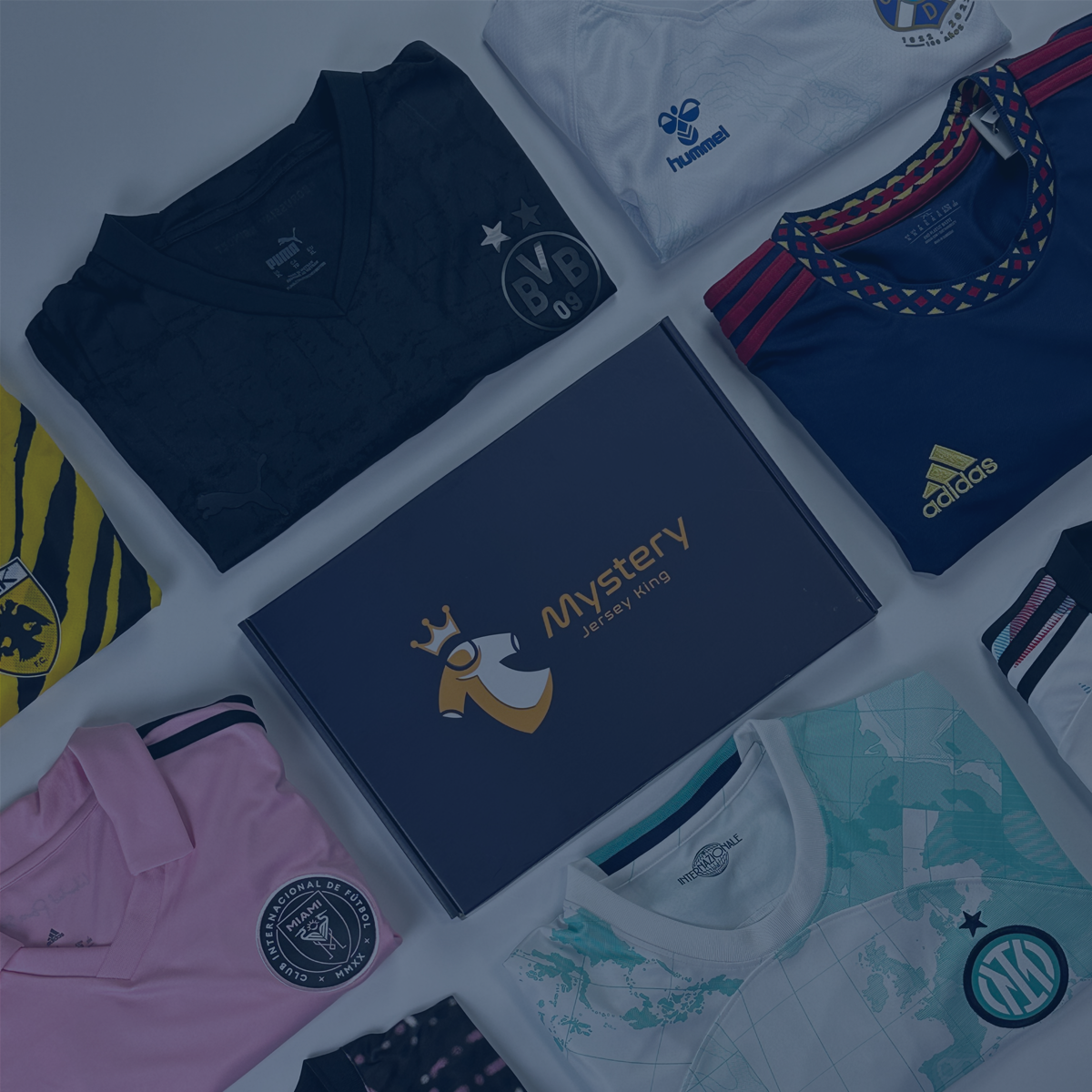
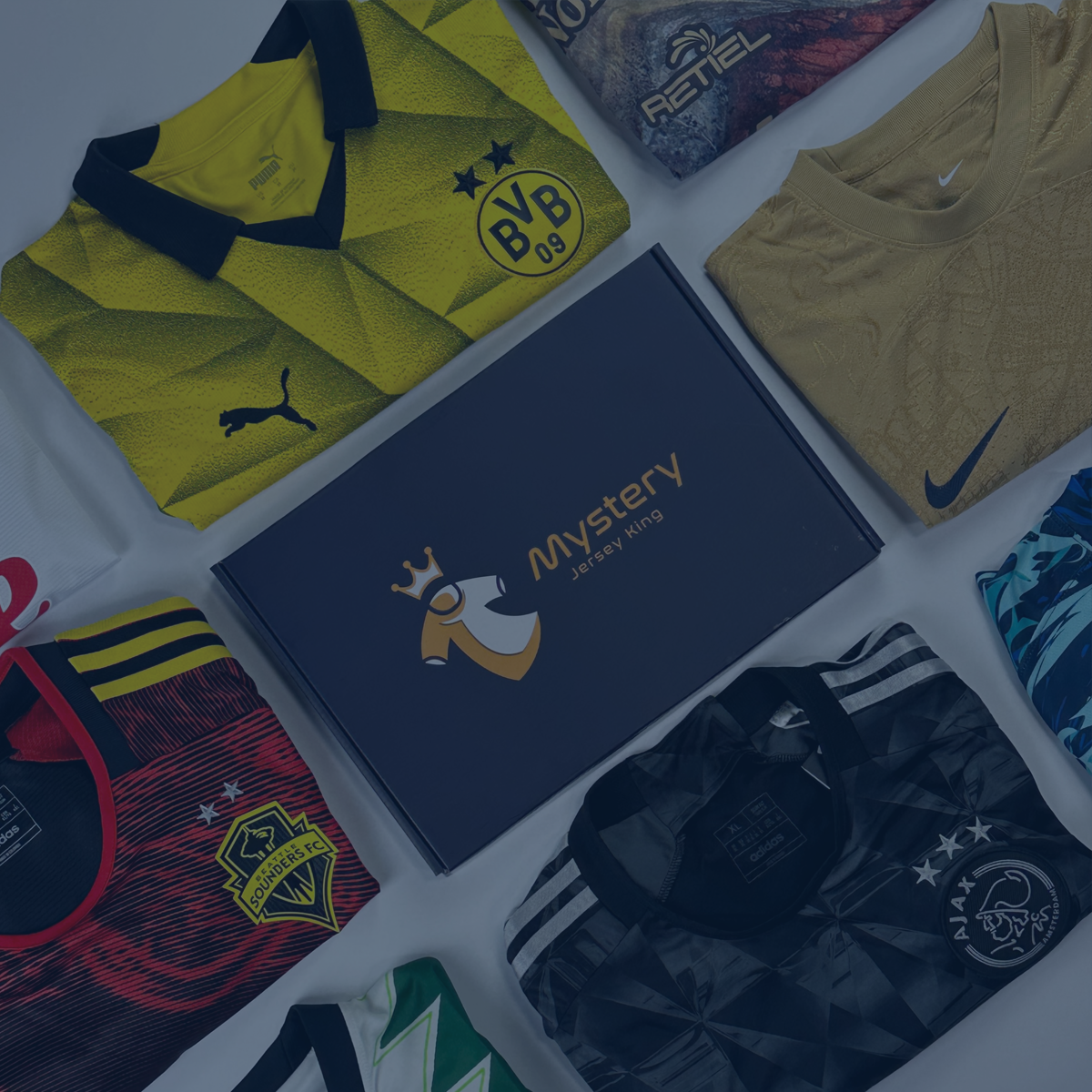
The World Cup 2026 Mystery Football Shirt Box has sold out. The mystery box has not. Every MJK mystery box sends one authentic football shirt without you knowing which one is coming, drawn from a global rotation spanning 50-plus leagues and 53 countries, dark horse nations very much included. Around one in seven MJK customers who order during a tournament window tells us they ended up actively following a nation they had never paid attention to before, simply because that nation's shirt arrived in their box. That is the whole point. Nobody chooses to become a Norway fan. It happens to you.
MJK has shipped more than 100,000 orders to date, rated 4.7/5 from 1,000+ reviews, shipping to 53 countries, with every shirt authenticated before it ships. For the classic underdog shirts, the Senegal 2002s and the South Korea 2002s, the retro football shirts collection is where they turn up.

As seen on BBC Dragons' Den. Mystery Jersey King appeared on BBC Dragons' Den and secured investment from Sara Davies. Every shirt in the MJK collection is authenticated before it ships. Read the full story here.
Related World Cup reads
Frequently Asked Questions
Who was the dark horse of the 2026 World Cup?
Norway were the dark horse of the 2026 World Cup. Playing at their first World Cup since 1998, with Erling Haaland and Martin Ødegaard, they beat Brazil 2-1 to reach the quarter-finals, eliminating the five-time champions, before going out 2-1 to England. Morocco also reached the quarter-finals, while Egypt and the USA both made the knockout stages.
Who are the dark horses at the 2026 World Cup?
The eight strongest dark horses at the 2026 World Cup are Norway (Haaland and Ødegaard at their first World Cup since 1998), Morocco (2022 semi-finalists with the same tactical core), Japan (recent friendly wins over Germany, Brazil and Spain), Senegal (2025 AFCON contenders with Sadio Mane), Egypt (Mohamed Salah's first World Cup), Croatia (Modric's farewell tournament), Ecuador (defensive solidity, only 5 goals conceded in qualifying), and USA (Pochettino's high-press system at home).
Did Norway knock Brazil out of the 2026 World Cup?
Yes. Norway beat Brazil 2-1 to reach the quarter-finals of the 2026 World Cup, eliminating the five-time champions in one of the biggest upsets of the tournament. Norway then lost 2-1 to England in the quarter-final. It was Norway's first World Cup since 1998 and their deepest run in the tournament's history.
Why does the new 48-team format favour dark horses?
The new 48-team format favours dark horses because 32 of the 48 teams now progress to the knockout phase: the top two from each of 12 groups plus the eight best third-placed teams. Previously a 32-team World Cup gave only 16 teams a knockout spot. The new round of 32 also adds an extra knockout match before the round of 16, giving dark horses two opportunities to defy expectation before reaching the genuine elite teams.
Can Morocco repeat their 2022 World Cup run in 2026?
Morocco reached the quarter-finals of the 2026 World Cup before losing 2-0 to France, falling one round short of repeating their 2022 semi-final run. The squad had matured rather than aged, with Achraf Hakimi, Yassine Bounou and Sofyan Amrabat all still in their primes, and the low-block, fast-transition system that produced the 2022 run remained intact.
Is Mohamed Salah's last World Cup in 2026?
The 2026 World Cup is widely expected to be Mohamed Salah's first and last World Cup. He missed Egypt's qualification for previous tournaments, and at 33 the 2026 tournament was realistically his only chance to play World Cup football. Egypt reached the knockout stages before going out 3-2 to Argentina, a closer contest than most expected.
Can a dark horse actually win the World Cup?
Only eight different nations have ever won the World Cup across 21 editions, so a dark horse winning the entire tournament remains extremely unlikely. But the expanded 48-team format makes it realistic for a dark horse to reach the latter stages, and 2026 proved it: Norway eliminated Brazil to reach the quarter-finals, and both Brazil and Germany were absent from the last eight for the first time in World Cup history.
Mystery Jersey King
The Dark Horses Make The Best Shirts. Every Time.
Senegal 2002. South Korea 2002. Morocco 2022. Norway 2026. Nobody chooses to become a Norway fan. It happens to you. The World Cup 2026 Box has sold out, but every MJK box still puts one genuine football shirt through your door without you knowing which one is coming: any club, any nation, any era.
100,000+ orders shipped. Rated 4.7/5 from 1,000+ reviews. Shipping to 53 countries. As seen on BBC Dragons' Den.



Leave a comment
This site is protected by hCaptcha and the hCaptcha Privacy Policy and Terms of Service apply.