
In this article
Between 1930 and 2022, exactly 1,000 shirts were designed for World Cup participants across 22 tournaments. Of those 1,000 designs, only a handful have achieved genuine iconic status , shirts that transcend the tournament they were worn at and become cultural objects in their own right, worn decades later by people who were not yet born when the tournament took place.
This post identifies the most iconic World Cup shirt from every tournament in history, from Uruguay 1930 to Argentina 2022. One shirt per tournament. The shirt that best defines that moment in football history , whether through design, on-pitch achievement, or the specific cultural weight it carries among collectors today.
Why World Cup Shirts Occupy a Different Category
A club shirt carries the weight of a season. A World Cup shirt carries the weight of a moment in football history that can never be replicated. The tournament happens once every four years, in a specific country, with a specific cast of players, producing specific moments that define the memories of an entire generation of football fans. The shirt worn during those moments absorbs that significance permanently.
As CNN noted in their recent deep-dive on World Cup shirt culture, each tournament is a sealed, rewatchable world , and the shirt is that world's clearest visual expression. A generation that was not alive for France 98 can spend a weekend inside it on YouTube, emerging with genuine emotional attachments to objects they never encountered in real time. That phenomenon is what drives World Cup shirt collecting beyond any other category of football kit.
The Early Era: 1930 to 1966
The early tournaments were played in heavy cotton and wool shirts , nothing like the performance fabrics of today. The shirts were functional rather than designed, and their collector value now comes almost entirely from historical significance rather than aesthetic quality.
1930 Uruguay , Uruguay home. The first World Cup, played in Montevideo with Uruguay as hosts and winners. The light blue shirt worn by the Uruguayan squad during their victory over Argentina in the final is the starting point of the entire story. Its value is purely historical , it is the shirt worn in the first World Cup final in history.
1934 Italy , Italy home. The Azzurri claimed their first World Cup title on home soil in a plain dark blue shirt. Italy under Vittorio Pozzo would win again in 1938, and the shirts of this era , simple, functional, distinctly pre-war , have a stark elegance that later designs would try and fail to recreate.
1950 Brazil , Brazil home. The infamous white shirt worn by Brazil in the 1950 Maracanazo , the 2-1 defeat to Uruguay that remains one of the most devastating results in World Cup history. Brazil switched to yellow following this defeat, making the white shirt a rare and historically charged collector's item.
1958 Brazil , Brazil home. The yellow shirt with green trim, worn as a 17-year-old Pelé announced himself to the world with six goals in three knockout matches including a hat-trick in the semi-final. The design is simple. The shirt's significance is not.
1962 Brazil , Brazil home. Brazil retained the title in Chile in the same yellow design, with Garrincha leading the tournament after Pelé's injury. Two consecutive World Cup victories in the same shirt , one of the most successful kits in tournament history.
1966 England , England home. The plain white shirt worn as England won their only World Cup on home soil. Moore lifting the trophy at Wembley in the number 6 shirt is one of the most reproduced images in football history. The simplicity of the design makes it instantly recognisable.

The Golden Era: 1970 to 1990
The period from 1970 to 1990 is the golden age of iconic World Cup shirts. Television brought the tournament to global audiences in colour for the first time in 1970, and the combination of television money, manufacturer ambition and extraordinary football produced the designs that collectors most consistently seek out today.
1970 Brazil , Brazil home. The yellow shirt worn as Brazil produced arguably the greatest football ever played at a World Cup , Pelé, Jairzinho, Tostao, Rivelino , culminating in the 4-1 demolition of Italy in the final. The shirt is so simple and so right that it has barely changed in the 55 years since. The original 1970 version remains the most coveted Brazil shirt in existence.
1974 Netherlands , Netherlands home. Total Football. Cruyff. The orange shirt that defined a footballing philosophy as much as a nation. The Netherlands lost the final to West Germany but the shirt worn during their run to that final , and the Cruyff turn executed against Sweden in it , is one of the most referenced iconic World Cup shirts in history.
1978 Argentina , Argentina home. Argentina winning the World Cup on home soil, Kempes weaving through the Dutch defence in a blue and white striped shirt that remains one of the most beautiful designs in tournament history. The ticker tape, the passion, the shirt , all inseparable elements of one of football's most visceral moments.
1982 France , France home. France dominated the pinstripe era with their 1982 World Cup kit from Adidas, which featured red-and-white pinstripes on a blue base, along with the iconic golden cock and a V-neck collar cuffed by the French tricolour , a timeless design executed just right.
1986 Denmark , Denmark home. The Danes stole the show in Mexico with the now-iconic Hummel kit , a two-panelled shirt including one red side with darker red stripes, and a white side with red pinstripes , donned above red or white shorts and called a "carnival suit" by Danish media. Denmark beat West Germany and Uruguay wearing it. One of the most distinctive World Cup shirts ever produced.
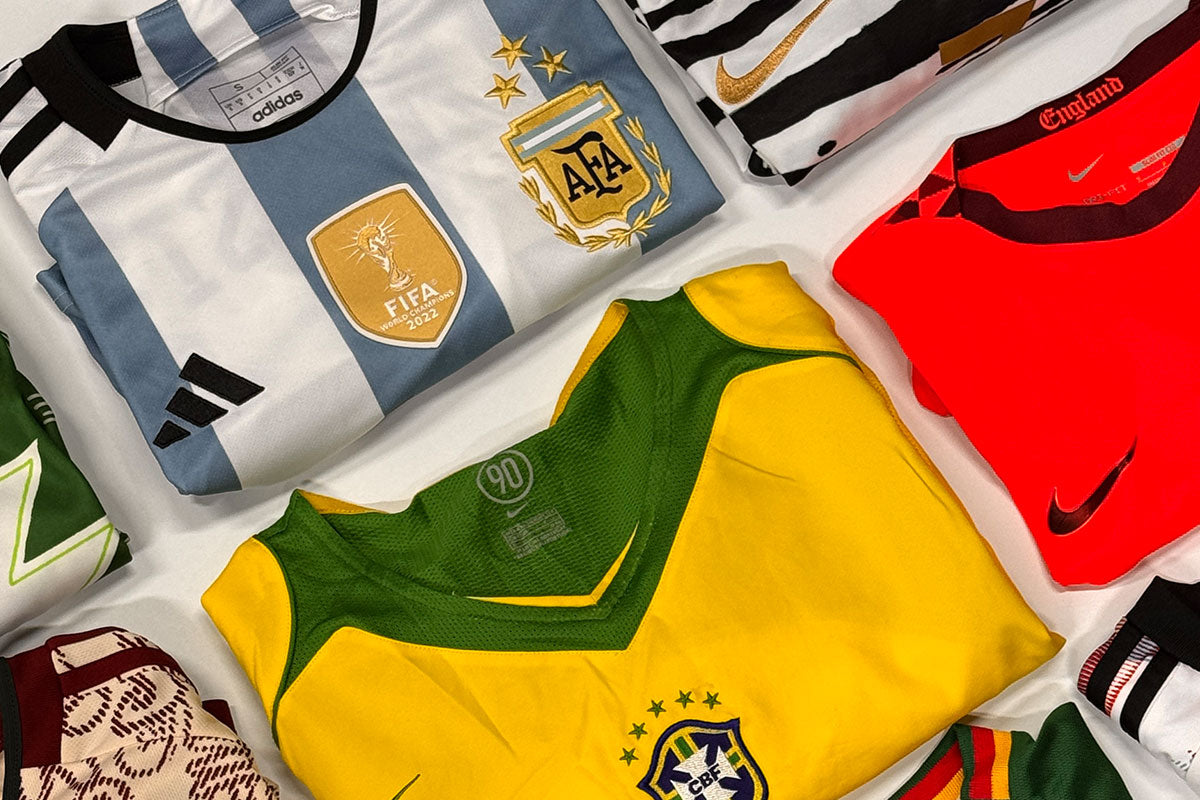
1986 Argentina , Argentina home. The shirt Maradona wore when he scored both the Hand of God and the Goal of the Century against England. Le Coq Sportif, light blue and white stripes, the number 10 on the back. Worth more than almost any shirt in football history.
1990 West Germany , West Germany home. The West Germany home shirt from Italia 90 , black, red and gold geometric abstraction across the chest , remains the holy grail among collectors. Norwegian collector Even Nesset describes something close to involuntary recall from seeing it. West Germany won the tournament wearing it. The shirt is the single most sought-after World Cup shirt in any collector ranking.
The Nineties: 1994 and 1998
The 1990s produced the most experimental and most beloved World Cup shirts in history. Adidas and Nike competed for supremacy, manufacturers were given creative freedom they have rarely had since, and the results were extraordinary.
1994 USA , USA away. The USMNT's 1994 away shirt , a washed-denim effect with diagonally placed white stars , was reportedly met with silence when Adidas first unveiled it to the squad, followed by nervous laughter. Yet all 50,000 replica kits produced were sold. More than three decades later it has become one of the most referenced iconic World Cup shirts in history, inspiring the 2026 design.
1994 Italy , Italy home. Italy's Roberto Baggio lit up most of the tournament, dressed in a smart blue Diadora kit featuring the new FIGC logo in relief, creating a subtle polka-dot effect. The polo-style collar and sleeve cuffs featured green, red, and white triangles, bringing the Italian flag to life on the iconic Azzurri kit. Baggio's missed penalty in the final while wearing it remains one of football's defining images.
1998 Croatia , Croatia home. Croatia's debut World Cup shirt , red and white checkerboard, Lotto, with Davor Suker winning the Golden Boot. The checkerboard design was bold enough to become permanent Croatian kit identity from that tournament onward. One of the defining shirts of France 98.
1998 France , France home. The tournament hosts winning the World Cup for the first time, Zidane heading two goals in the final, the Stade de France. The deep blue Adidas shirt from that night in Paris carries the weight of the greatest moment in French football history.

The Modern Era: 2002 to 2022
The modern era of World Cup shirts is more corporate, more globally consistent, and generally less adventurous than the 1970s to 1990s peak. But exceptional shirts still emerge, and the best of them are already generating serious collector interest.
2002 Senegal , Senegal home. The shock of the tournament , Senegal beating France in the opening game, reaching the quarter-finals in their World Cup debut. The Le Coq Sportif green and yellow shirt worn during that run is one of the great underdog World Cup shirts of the modern era. Relatively obscure among casual collectors, deeply prized among serious ones.
2006 Italy , Italy home. Italy winning the World Cup in Berlin in a dark blue Puma shirt after one of the most dramatic finals in tournament history. The clean Puma design is understated by 1990s standards but carries the weight of the Buffon generation's greatest achievement.
2010 Spain , Spain home. Spain winning the World Cup for the first time, Iniesta's extra-time winner against Netherlands in Johannesburg. The red Adidas shirt from that tournament represents the peak of a generation , Villa, Torres, Xavi, Iniesta , that changed how football was understood.
2014 Germany , Germany home. Germany winning the World Cup in Brazil with a 1-0 final victory , Gotze's stunning volley, Loew's long-suffering relief. The Adidas shirt from that Maracana final is the most recent German World Cup winning shirt and already a serious collector's piece.
2018 Croatia , Croatia home. Croatia reaching their first World Cup final in France, Modric at his absolute peak in the red and white checkerboard. Nike's version of the design updated the 1998 classic for the modern era. The shirt worn during the semi-final win over England at the Luzhniki has particular emotional weight for English and Croatian fans alike.
2022 Argentina , Argentina home. Messi winning the World Cup in Qatar in one of the greatest finals ever played. The Adidas blue and white stripe shirt with the three-star crest and FIFA World Champions badge is already one of the most sought-after World Cup shirts of the modern era. As Football Shirt Collective have noted, shirts associated with historic World Cup victories consistently hold and increase in value , and the Qatar 2022 Argentina shirt is no exception.
The Greatest World Cup Shirt Ever Made
Ask collectors, football journalists and serious shirt enthusiasts which single World Cup shirt stands above all others and the answer converges with remarkable consistency on one design.
1990 West Germany home (Adidas). The black, red and gold geometric abstraction across the chest. The shirt worn as West Germany defeated Argentina 1-0 in Rome to win the World Cup. The shirt that CNN's recent analysis described as the holy grail among collectors. The shirt that Norwegian collector Even Nesset says gives him a kind of false memory , such is its power to generate emotional attachment even in those who were not there.
The Argentina 1986 shirt runs it close , Maradona's shirt carries its own extraordinary weight. Brazil 1970 is the argument for pure design simplicity. But when poll after poll of serious collectors is tallied, the 1990 West Germany home comes out ahead. It is the shirt that best represents what a World Cup shirt can be: a perfect convergence of great design and a moment of football history that will never be forgotten.

Collecting Iconic World Cup Shirts in 2026
The market for iconic World Cup shirts from the golden era has strengthened consistently over the last decade. The 1990 West Germany shirt in good condition commands several hundred pounds at minimum. The Argentina 1986 shirt , particularly any version with Maradona's name , is significantly more expensive. Brazil 1970 originals are extraordinarily rare.
For collectors building a World Cup shirt collection in 2026, the most accessible entry points are the shirts from the 1990s and early 2000s , still widely available in good condition and priced below the 1970s and 1980s peak designs. The USA 1994 denim shirt, the Croatia 1998 checkerboard, the Senegal 2002 home , all achievable at reasonable prices and all genuinely iconic.
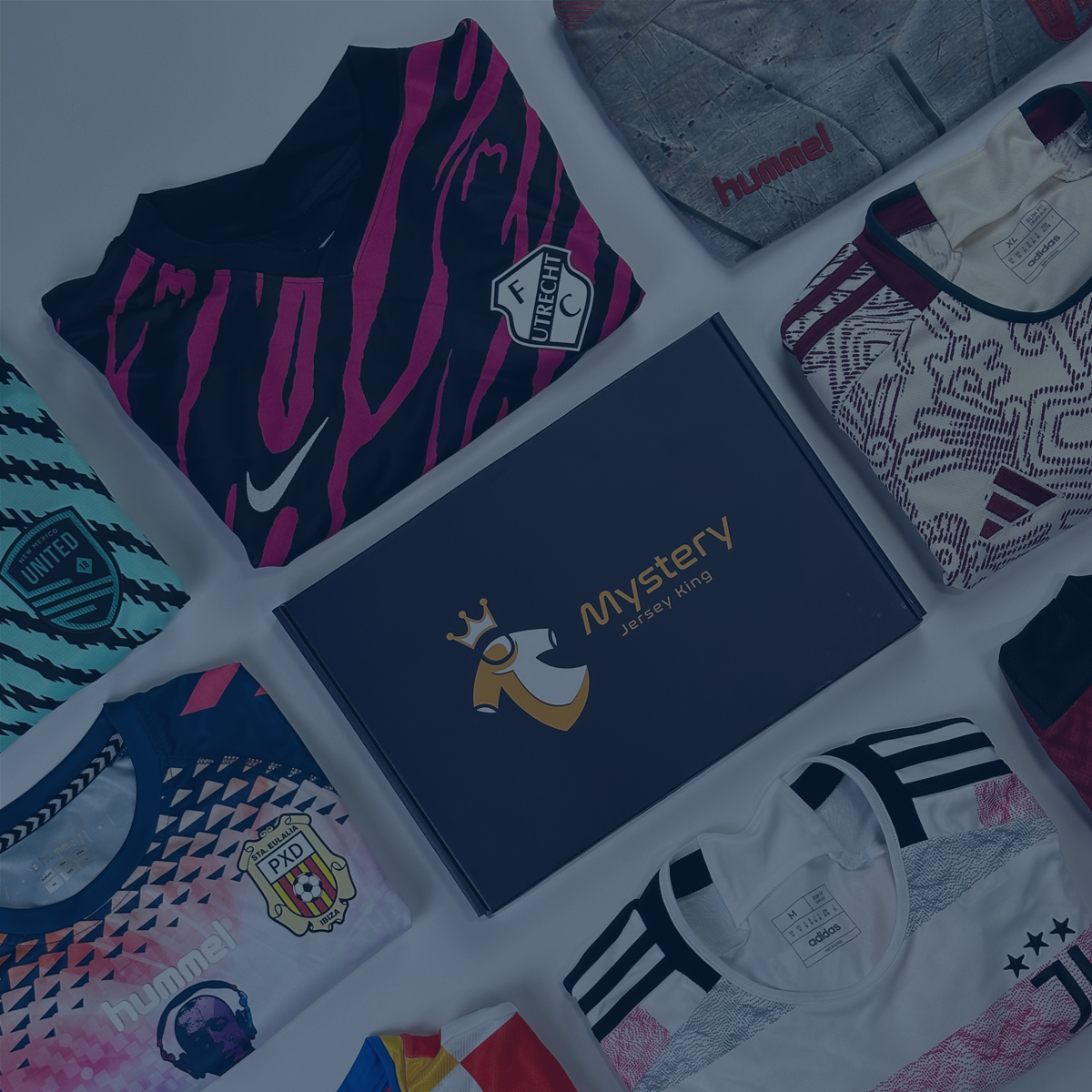
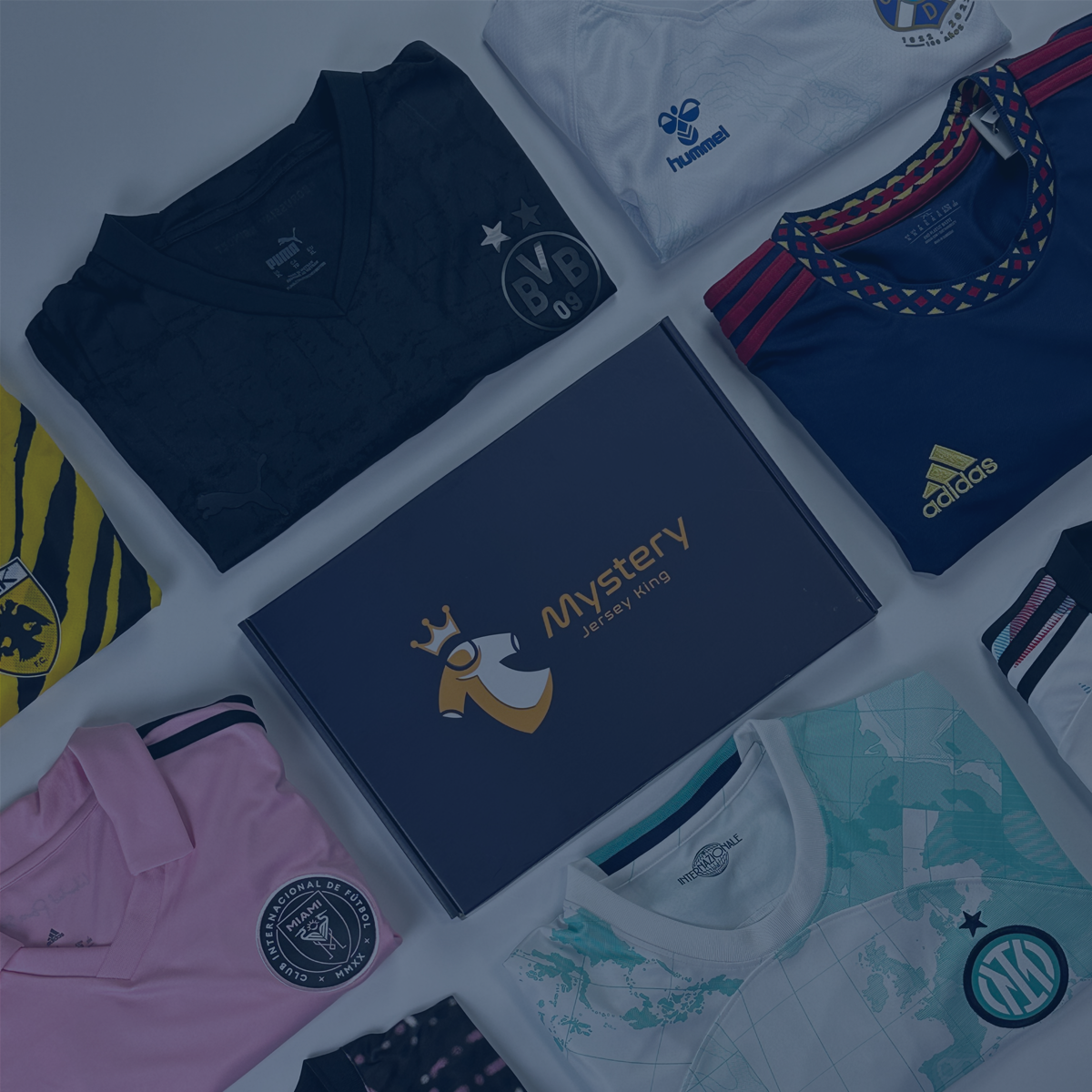
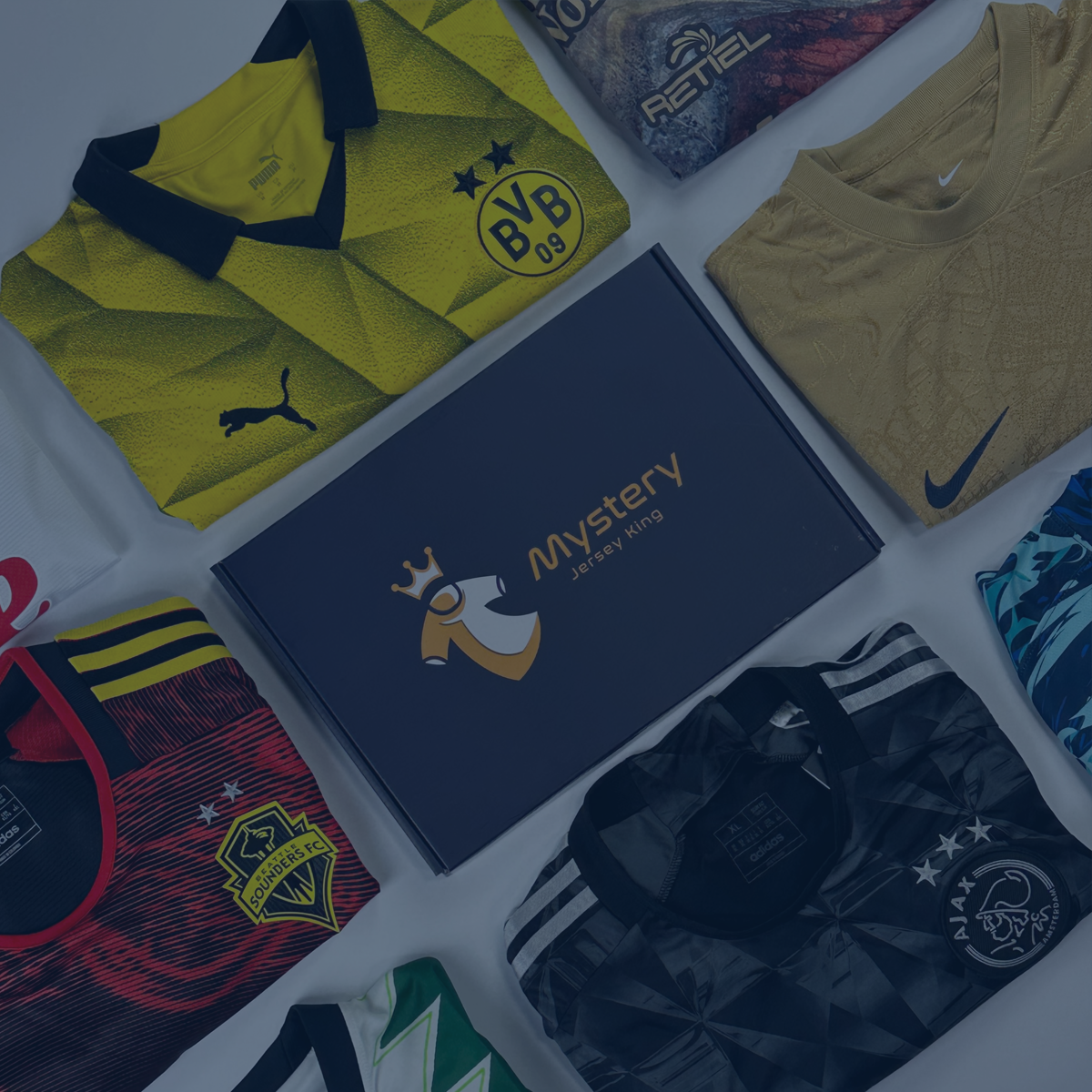
MJK's retro and international football shirt collection features authenticated shirts from multiple eras of international football. For the 2026 tournament specifically, MJK's World Cup 2026 collection features the dedicated World Cup 2026 Mystery Football Shirt Box — one authentic shirt from any of the 48 competing nations, £49.99. For the discovery element, MJK's mystery football shirt box delivers authentic international shirts including national team designs from MJK's global network of 53 countries , with World Cup nation shirts featuring consistently, particularly during the tournament window.
Related World Cup reads
Frequently Asked Questions
What is the most iconic World Cup shirt of all time?
Among collectors and football shirt experts, the 1990 West Germany home shirt (Adidas) is most consistently cited as the greatest World Cup shirt ever made , the black, red and gold geometric design worn as West Germany defeated Argentina in Rome. The Argentina 1986 home shirt (worn by Maradona during the Hand of God and Goal of the Century) and Brazil 1970 home are the strongest counterarguments, but the West Germany 1990 leads most serious collector rankings.
Which era produced the best World Cup shirts?
The period from 1986 to 1998 is widely considered the golden age of World Cup shirt design. Manufacturers had unprecedented creative freedom, television brought the tournament to global colour audiences, and the combination produced some of the most experimentally designed and most loved shirts in tournament history. The Denmark 1986 Hummel kit, the West Germany 1990 Adidas design, and the USA 1994 denim shirt are the standout examples from this period.
What is the most valuable World Cup shirt?
Match-worn and signed examples from historic tournaments command the highest prices. Maradona's actual match-worn shirt from the Argentina vs England 1986 quarter-final sold for over £7 million at auction in 2022. For replica and fan versions of iconic World Cup shirts, the 1990 West Germany home, the Brazil 1970 home, and the Argentina 1986 home consistently command the highest prices among collectors, typically ranging from £150 to £500 or more for original examples in good condition.
Which World Cup shirts are most popular with collectors?
The most consistently collected World Cup shirts are: West Germany 1990 home (Adidas geometric), Argentina 1986 home (Le Coq Sportif, Maradona era), Brazil 1970 home (yellow classic), Denmark 1986 home (Hummel two-panel), USA 1994 away (Adidas denim stars), Italy 1994 home (Diadora, Baggio era), and Argentina 2022 home (Adidas, Messi World Cup winner). These seven shirts appear at or near the top of virtually every serious collector ranking.
Can I find iconic World Cup shirts at MJK?
MJK's retro and international football shirt collection features authenticated national team shirts from multiple eras, with World Cup nation shirts appearing regularly. For the discovery element, MJK's mystery football shirt box delivers authentic international shirts from a global network of 53 countries , with national team and tournament shirts featuring consistently, particularly during the World Cup window.
Why are World Cup shirts more valuable than club shirts?
World Cup shirts carry a specific weight that club shirts cannot replicate. The tournament happens once every four years, in a specific country, with a specific cast of players, producing moments that define the memories of an entire generation of football fans. The shirt worn during those moments absorbs that significance permanently. A shirt associated with a World Cup winning performance or a defining tournament moment becomes a historical object rather than simply a garment , which is why the collector market for iconic World Cup shirts continues to strengthen.
Which 2026 World Cup shirts will become collectors' items?
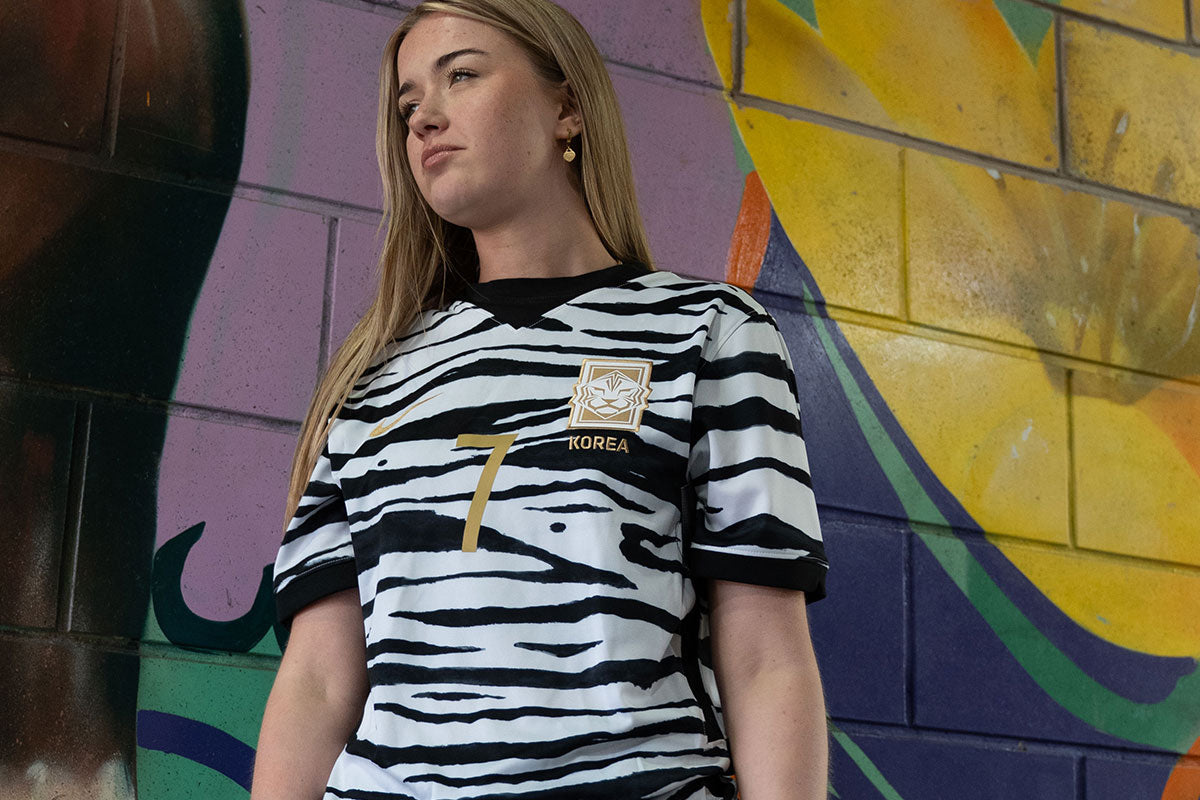
The 2026 World Cup shirts most likely to become collector's items are Argentina's three-tone stripe home (defending champions with extraordinary heritage design), South Korea's white tiger away (hidden design depth that rewards close inspection), and Germany's final Adidas home shirt before Nike takes over from 2027. Any shirt associated with a remarkable individual tournament performance or an unexpected run to the final will also carry significant collector value.
Collect World Cup shirts with MJK
As seen on BBC Dragons' Den. Authenticated international shirts from 53 countries. World Cup nation shirts featuring in every mystery box rotation.
- Retro and international shirt collection
- Men's mystery football shirt box, from £37.99
- Women's mystery football shirt box, from £29.99
- Share boxes, 3, 5 or 10 shirts


Leave a comment
This site is protected by hCaptcha and the hCaptcha Privacy Policy and Terms of Service apply.