
The Short Version
No number on a football shirt carries more weight than 7. It began as a simple position marker for the right winger, and became the number clubs guard most closely. This is the real story behind the number 7 shirt, from Brazil to Madrid to Liverpool, and why David Beckham once chose 23 over it.
In this article
Every number on a football shirt tells you something, but none carries the weight of 7. It is the number clubs hand over as a statement, the number a new signing can be too nervous to accept, and the number that has made careers as much as it has crowned them. The story is usually told through a single club, but the real picture is bigger than that: Brazil, Spain, England and beyond have each written their own version of what the number 7 means, often with almost nothing in common except the shirt itself. This is the real story behind it, well beyond the one club most people think of first.
Where the Number 7 Actually Came From
The number 7's mystique starts with something far more practical than glamour. In football's original numbering system, shirts were handed out by position rather than choice, one to eleven, and the outside-right, the traditional right winger, wore 7. That simple assignment placed the number on the shoulders of the game's flair players for decades before anyone thought to treat it as special.
England's Stanley Matthews did more than anyone to change that. Known as the Wizard of the Dribble, Matthews built a professional career lasting 33 years around beating a full-back and delivering the cross, and he is widely regarded as British football's first genuine superstar. It was his style, and his fame, that made 7 the number every aspiring winger in post-war Britain wanted, long before George Best or any Manchester United great made it their own.

Garrincha, and the Treble No One Else Has Matched
No number 7 story is more remarkable than Brazil's Garrincha at the 1962 World Cup. With Pele injured for most of the tournament, Garrincha carried Brazil almost single-handedly to a second consecutive title, and in doing so became the first player in World Cup history to win the Golden Ball for best player, the Golden Boot for top scorer, and the trophy itself in the same tournament. No one else has ever matched that specific treble.
Garrincha's story is as human as it is remarkable. Born with a spinal condition that left him bow-legged, his dribbling was virtually impossible to read precisely because his body moved in ways defenders could not anticipate. Nicknamed the Joy of the People in Brazil, he and Pele never lost a match together on the national team, and his 1962 tournament remains one of the single greatest individual World Cup performances in the sport's history.
Raul, and 16 Years at Real Madrid
Real Madrid's Raul Gonzalez wore the number 7 for the majority of a career that stretched from 1994 to 2015, and few players anywhere have carried a shirt with more consistency. Raul made over 500 appearances for Real Madrid, scoring 228 goals, and stood as the club's all-time leading scorer until Cristiano Ronaldo eventually surpassed him. He won six La Liga titles and three Champions League trophies along the way.
What makes Raul's story genuinely unusual is where he started: he rose through the youth ranks at Atletico Madrid, Real's fiercest city rival, before joining Real Madrid as a teenager and becoming one of the club's defining modern figures. He now manages Real Madrid's reserve side, Castilla, continuing a relationship with the club that has lasted more than three decades.
Garrincha's 1962 and Raul's sixteen years show two completely different ways to own a number. One is a single, unrepeatable tournament. The other is two decades of simply never letting the standard drop.
- Jamie King, co-founder, Mystery Jersey King
Why Beckham Chose 23, Not 7
David Beckham's number 7 at Manchester United was one of the most recognisable shirts in world football by the time he signed for Real Madrid in 2003. There was just one problem: Raul already owned the number at his new club, and had no intention of giving it up. Rather than fight for a shirt that wasn't available, Beckham turned to a completely different source of inspiration, choosing 23 in honour of NBA legend Michael Jordan, who had just retired.
The choice stuck with him for the rest of his career. Beckham kept 23 when he later moved to LA Galaxy, and wore 32, simply 23 reversed, during spells at AC Milan and Paris Saint-Germain. It is a reminder that even football's most famous number 7 was, for half his career, someone else's number entirely.
Liverpool's Own Number 7 Story
Manchester United's number 7 lineage gets most of the attention, but Liverpool has its own, entirely separate history with the shirt. Kevin Keegan wore it between 1972 and 1977, building a reputation that also took in spells at Hamburg, Newcastle United and Southampton, and won the Ballon d'Or twice during his career. Kenny Dalglish inherited the shirt afterwards, scoring the winning goal in the 1978 European Cup final while wearing it and going on to lift the trophy twice more.
Dalglish remains one of the most decorated players in Liverpool's history, later becoming player-manager, and he holds the record for most Scotland appearances jointly with the leading goalscorer position too, level with Denis Law on 30 international goals. In 2006, Liverpool supporters voted him top of a poll of the greatest players ever to represent the club. It is proof the number 7 built entire dynasties well beyond Old Trafford.
Manchester United, and Why the Number Isn't Universal

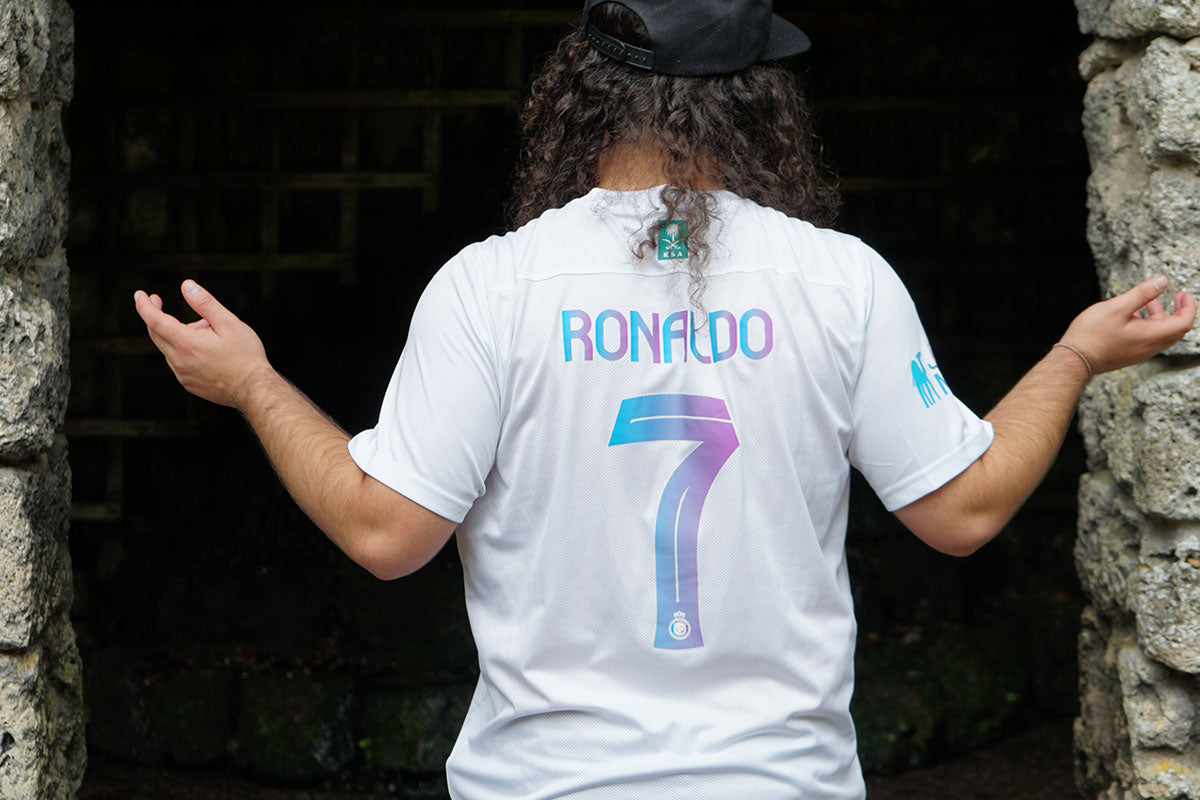
Manchester United's own number 7 lineage remains the most mythologised in the game: George Best, Bryan Robson, Eric Cantona, David Beckham and Cristiano Ronaldo each wore it in turn, and Sir Alex Ferguson personally handed the shirt to a then-teenage Ronaldo in 2003, who later admitted he felt surprised and intimidated by the weight of what he was being given. Cantona himself put it best, saying the number seven at United means something more than at other clubs, tied specifically to the city and the club's own history with flair players.
Yet even at the highest level, the number 7 is not universal. Portugal's Luis Figo, the 2000 Ballon d'Or winner, wore the number 10 at Real Madrid but was Barcelona, Sporting and Portugal's number 7, proof that a single legendary career can carry two completely different iconic numbers depending on the club. Andriy Shevchenko carried the shirt to similar effect at AC Milan, winning both the Ballon d'Or and the Champions League while wearing it, and remains one of Serie A's most feared strikers of his generation. The shirt's meaning is built by whoever wears it at a specific club, not by the number itself.
Collecting Number 7 Shirts
Number 7 shirts are consistently among the most collected pieces in football, precisely because the number has carried so many genuinely different legacies across different clubs and countries rather than just one. A genuine Garrincha-era Brazil shirt, a Raul-era Real Madrid kit, or a Beckham or Ronaldo Manchester United shirt each represent a completely different chapter of the same story, and collectors often build around a specific favourite era rather than the number generally. The number's reach has only grown as players have carried it between continents, from Ronaldo's spells in England, Spain, Italy and Saudi Arabia to the shirt's long-standing place in South American football, meaning a single collection of number 7 shirts can genuinely span the entire history of the modern game.
As with any prized shirt, authenticity matters more the more collectable the piece becomes. Our guide on how to spot a fake Premier League shirt before you buy covers the checks worth making before paying a premium for any famous number 7.
Owning One
Genuine current and retro shirts, number 7 or otherwise, are available through the retro football shirts collection. Or leave it to chance entirely. An MJK mystery box sends one genuine football shirt without you knowing which one is coming, any club, any nation, any era, drawn from a supply network spanning more than 50 leagues and 53 countries.
As seen on BBC Dragons' Den. Co-founder Alex Street pitched Mystery Jersey King on Series 22, and Sara Davies MBE invested £50,000 for 15%. Read the full story here.
Related reads
Frequently Asked Questions
Why is the number 7 traditionally worn by wingers?
In football's original positional numbering system, players were assigned shirts one to eleven based on their role, and the outside-right, the traditional right winger, wore number 7. That practical assignment is why so many of the game's great attacking wide players have worn the number ever since.
What did Garrincha achieve wearing number 7 at the 1962 World Cup?
With Pele injured for most of the tournament, Brazil's Garrincha became the first player in World Cup history to win the Golden Ball for best player, the Golden Boot for top scorer, and the World Cup itself in the same tournament, a treble no other player has since matched.
Why did David Beckham wear 23 instead of 7 at Real Madrid?
Beckham's Manchester United number 7 was already taken at Real Madrid by club legend Raul, who had no intention of giving it up. Beckham instead chose 23, inspired by NBA legend Michael Jordan, who had recently retired, and kept the number through his later moves to LA Galaxy.
Who wore number 7 for Liverpool before Manchester United made it famous?
Kevin Keegan wore Liverpool's number 7 between 1972 and 1977, winning the Ballon d'Or twice, before Kenny Dalglish took it over and scored the winning goal in the 1978 European Cup final wearing it. Liverpool's number 7 history developed entirely separately from Manchester United's.
Did Luis Figo always wear number 7?
No. Luis Figo wore number 7 for Sporting, Barcelona, Inter Milan and Portugal, but at Real Madrid he wore number 10 instead, since 7 was already Raul's. It shows that even one legendary career can be tied to two completely different iconic numbers depending on the club.
Who wore number 7 for Manchester United before Cristiano Ronaldo?
Manchester United's number 7 was worn by George Best, Bryan Robson, Eric Cantona and David Beckham before Ronaldo, in that order, making it one of the most mythologised shirt numbers in football history. Sir Alex Ferguson personally gave the number to Ronaldo in 2003.
How does a mystery football shirt box work?
You pick your size, and Mystery Jersey King picks the shirt. One genuine football shirt arrives without you knowing which one is coming: any club, any nation, any era, drawn from a supply network spanning more than 50 leagues and 53 countries. MJK has shipped over 100,000 orders and is rated highly across more than 1,000 reviews.
Mystery Jersey King
Every Number Tells A Story. Yours Is Inside.
Whichever number you collect, a genuine shirt is a genuine shirt. Every MJK box puts one through your door without you knowing which one is coming: any club, any nation, any era.
100,000+ orders shipped. Rated 4.7/5 from 1,000+ reviews. Shipping to 53 countries. As seen on BBC Dragons' Den.


Leave a comment
This site is protected by hCaptcha and the hCaptcha Privacy Policy and Terms of Service apply.