The Short Version
Few shirts carry a story like Nottingham Forest's. Garibaldi red, named for an Italian revolutionary, went on to win back-to-back European Cups with no sponsor on the chest at all. This is the Forest shirt told era by era: the makers, the sponsors, and the unrepeatable achievement that makes the club's shirt history unlike any other in England.
In this article
- Garibaldi red, the origin of the colour
- Clough, and the unsponsored European Cups
- Panasonic, the first sponsor
- Shipstones, Labatt's and the local years
- Pinnacle and the Premier League era
- The modern shirt and the UNHCR shirt
- A club that coloured the world
- What collectors chase, and what to check
- Owning a piece of Forest history
- Frequently asked questions
Nottingham Forest are one of the most romantically compelling clubs in football history, a side that went from an unremarkable English club to conquerors of Europe within a matter of years, and whose shirt carries a genuinely unique achievement that no club has matched since and, given how the modern game now works, almost certainly never will. This is the Forest shirt, era by era, the way a collector reads it.
Garibaldi Red, the Origin of the Colour
Nottingham Forest were founded in 1865, among the very first clubs anywhere to wear red, and the club's official colours were recorded as Garibaldi Red, named for the Italian revolutionary Giuseppe Garibaldi, whose followers were known for their red shirts and who is said to have visited Nottingham in the mid-19th century. Red, white shorts and black socks have formed the club's identity ever since.
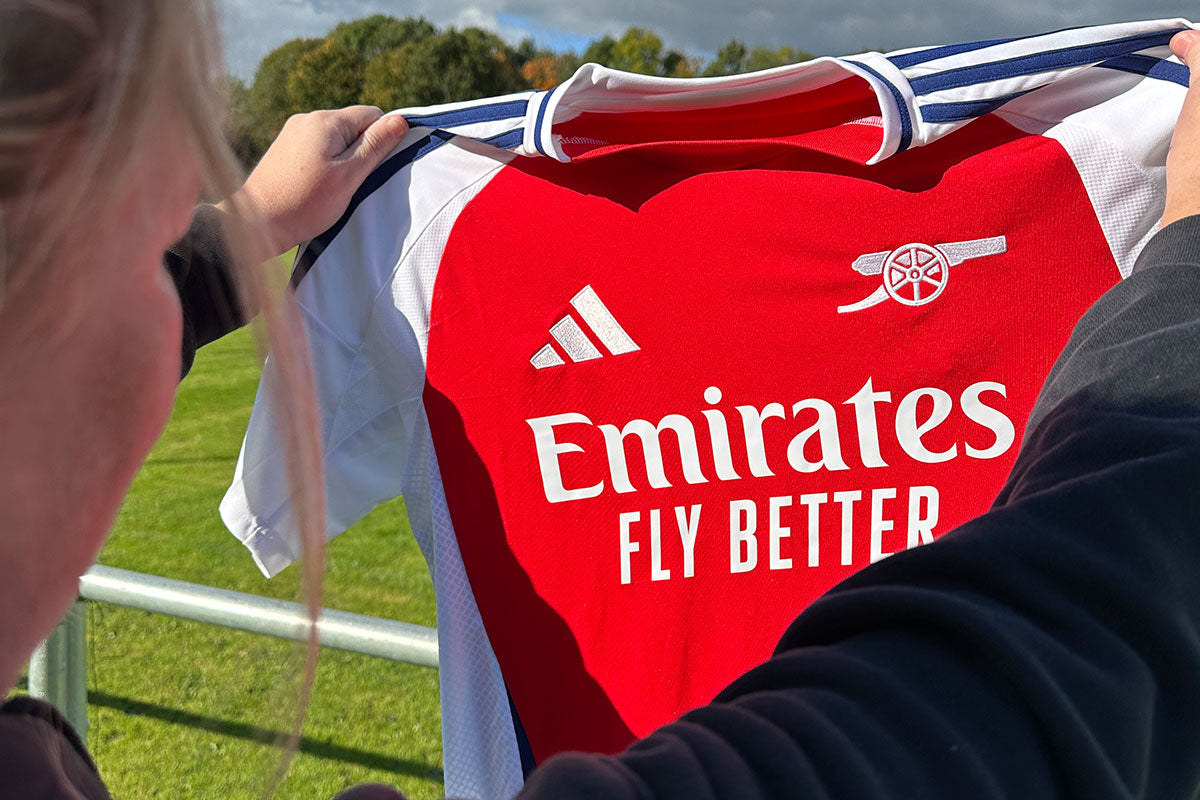
That early adoption of red gave Forest an outsized influence on football far beyond Nottingham. Several early Arsenal players had come through Forest before founding Dial Square, and they brought red Forest shirts south with them, which is the direct reason Arsenal play in red to this day, a story we explored in why Premier League clubs play in their colours.

Clough, and the Unsponsored European Cups
No shirt story in English football matches what happened at Forest between 1975 and 1980. Brian Clough arrived as manager in January 1975 with the club in the Second Division, and within three years had them crowned champions of England. Within four years, Forest had done something no one could have predicted: they were champions of Europe, and they retained the trophy the following season, winning back-to-back European Cups in 1979 and 1980.
What makes the shirts from that campaign genuinely unique among major European trophies of the modern era is that Forest achieved both triumphs wearing shirts with no sponsor on the chest at all. Shirt sponsorship had not yet become a fixture of the English game, which gives those two European Cup-winning shirts an aesthetic purity collectors find irresistible: pure Garibaldi red, no branding, two European Cups. It is genuinely one of a kind.
Panasonic, the First Sponsor
Forest's first shirt sponsor arrived only after that European success, when the Japanese electronics company Panasonic took the front-of-shirt slot from 1980 to 1982. It marked the end of the unsponsored era and the beginning of a long procession of sponsors that would follow, each one dating a different chapter of the club's shirt history.
Wrangler, the American denim brand, followed with a distinctive smaller text treatment, and the Scottish lager Skol appeared through the mid-1980s, part of a run of shirts from a period when Forest remained a genuine force in English and European football even after Clough's greatest triumphs.

Shipstones, Labatt's and the Local Years
Shipstones, one of Nottingham's own breweries, became the club's sponsor from 1987 into the early 1990s, a genuinely local sponsor for a genuinely local club, in the same tradition as the local-brewery shirts that defined so many English clubs of the era. It was followed by Labatt's, the Canadian brewing company, whose logo appeared on some of Forest's most recognisable Premier League shirts of the mid-1990s.
The Labatt's era captured a brief period of genuine top-flight ambition for the club, before relegation began a long road back that would eventually lead to years outside the Premier League. Those mid-90s shirts are cherished by fans precisely because they represent the last real taste of the club's old stature before the difficult years that followed.
Pinnacle and the Premier League Era
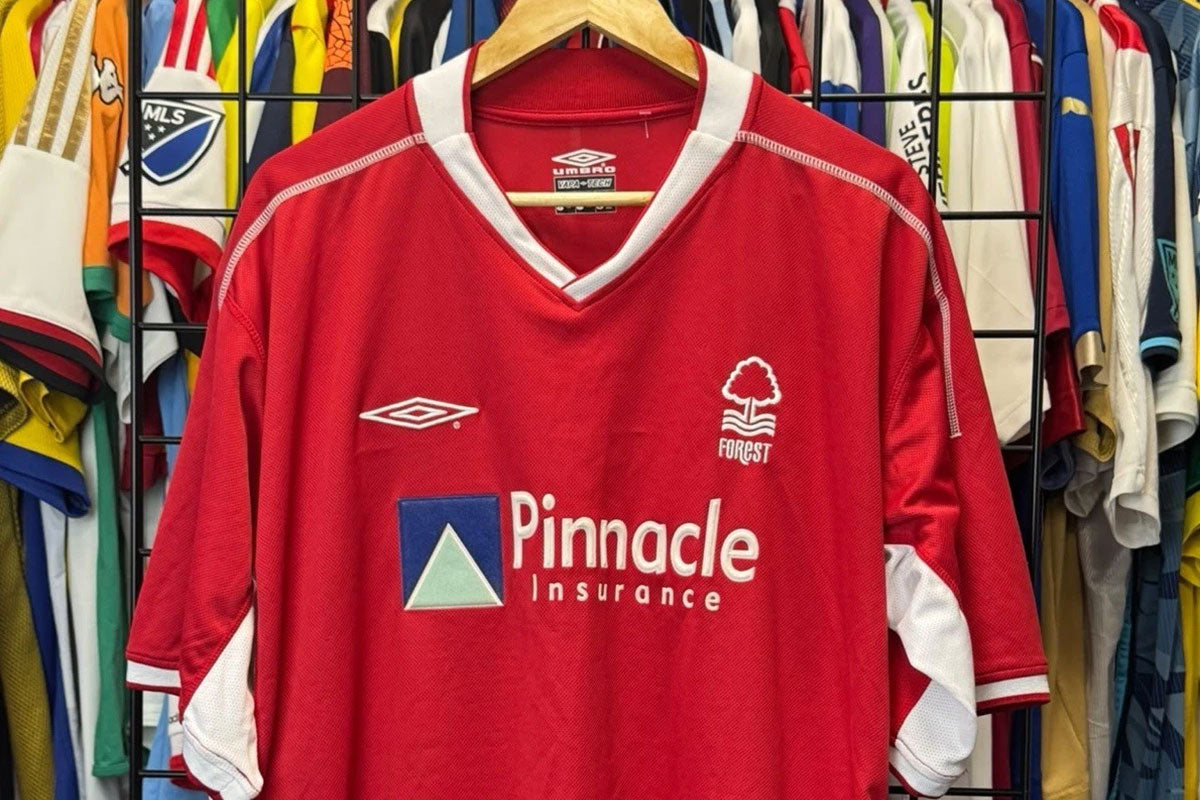
Pinnacle Insurance sponsored the shirt from 1997 to 2003, spanning the tail end of Forest's time in the Premier League and the start of a long spell in the divisions below. Capital One followed from 2003, and the shirts of this period are collected as much for what they represent, a proud club adjusting to reduced circumstances, as for their design. Even in the club's leaner years, the red never wavered, which is precisely why the shirt has kept its emotional pull for supporters throughout.
Through this stretch and beyond, a long list of sponsors including Victor Chandler, John Pye Auctions and several betting and finance brands appeared on the shirt, each marking a specific, often difficult, season in the club's history in the lower divisions.
The Modern Shirt and the UNHCR Shirt
Forest's return to the Premier League in recent years has brought a wave of new interest in the shirt, with designs that consciously honour the Garibaldi red tradition while meeting the demands of the modern game. One particularly notable modern shirt carried the UNHCR, the United Nations refugee agency, as sponsor, a striking departure from the commercial sponsors that had dominated the shirt for decades and a genuinely distinctive chapter in the club's story.
For collectors, Forest's return to the top flight has renewed significance for every shirt from this era, since a club back among England's elite after years away always sees fresh appetite for its history.
No sponsor on the shirt, and two European Cups. No club in the modern game will ever repeat that combination. It makes those Forest shirts some of the purest pieces of history any collector could own.
- Jamie King, co-founder, Mystery Jersey King
A Club That Coloured the World
Arsenal are not the only club that owes something to Forest's early red. On a tour of South America in the early 1900s, Forest thrashed local opposition in Argentina, and the president of Club Atletico Independiente was so struck by what he saw that he changed his own club's shirt from white and blue to red, a colour Independiente still wears today. An Englishman with a Nottingham connection is also credited with helping give AC Milan their famous red, part of the same remarkable chain of influence.
It means that a shirt colour first written down by a Nottinghamshire committee in 1865 now appears on some of the biggest clubs on multiple continents, an extraordinary legacy for a club whose own trophy cabinet, while extraordinary in its own right, is modest compared to the giants it helped inspire.
What Collectors Chase, and What to Check
The most sought-after Forest shirts are, unsurprisingly, the unsponsored 1979 and 1980 European Cup-winning kits, followed closely by the Shipstones and Labatt's shirts of the local-sponsor years and the Pinnacle-era Premier League shirts. Named and numbered examples tied to the Clough era carry an especially heavy premium given the scarcity and significance of that period.
Forest are a well-collected club with a genuinely rich history, so authenticity matters. The sponsor is your fastest dating tool here, since the sequence is so well documented, and checking the badge and manufacturer logo for stitching quality, the neck and wash labels, and the fabric against the period is the surest way to confirm a genuine shirt. Given how tightly the sponsor eras map onto specific seasons, a Forest shirt is often one of the easier vintage kits to date precisely once you know the sequence.
Owning a Piece of Forest History
Genuine retro Nottingham Forest shirts surface regularly, and the retro football shirts collection is where to look. The unsponsored European Cup era shirts in particular are exceptionally rare, so condition and authenticity are everything.
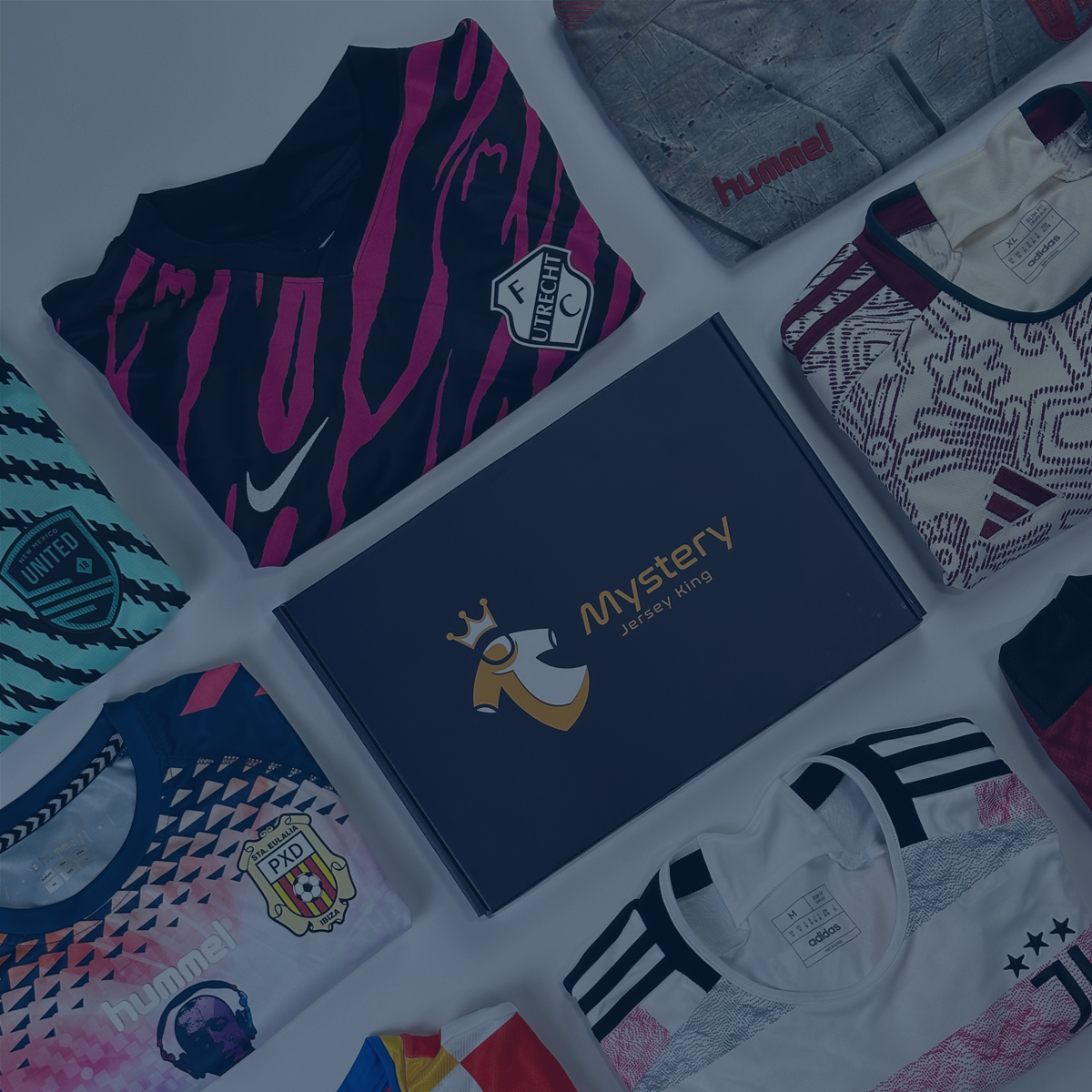
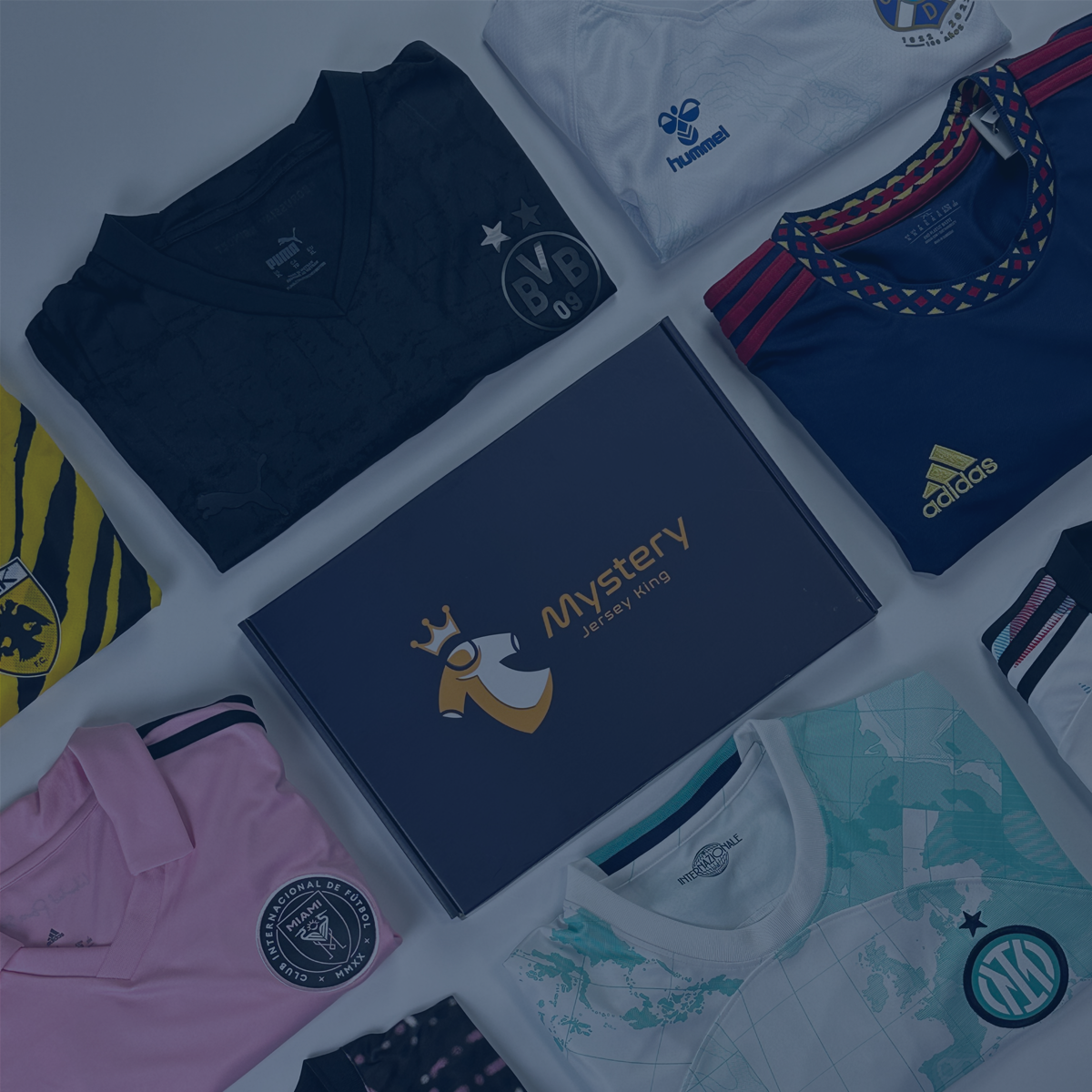
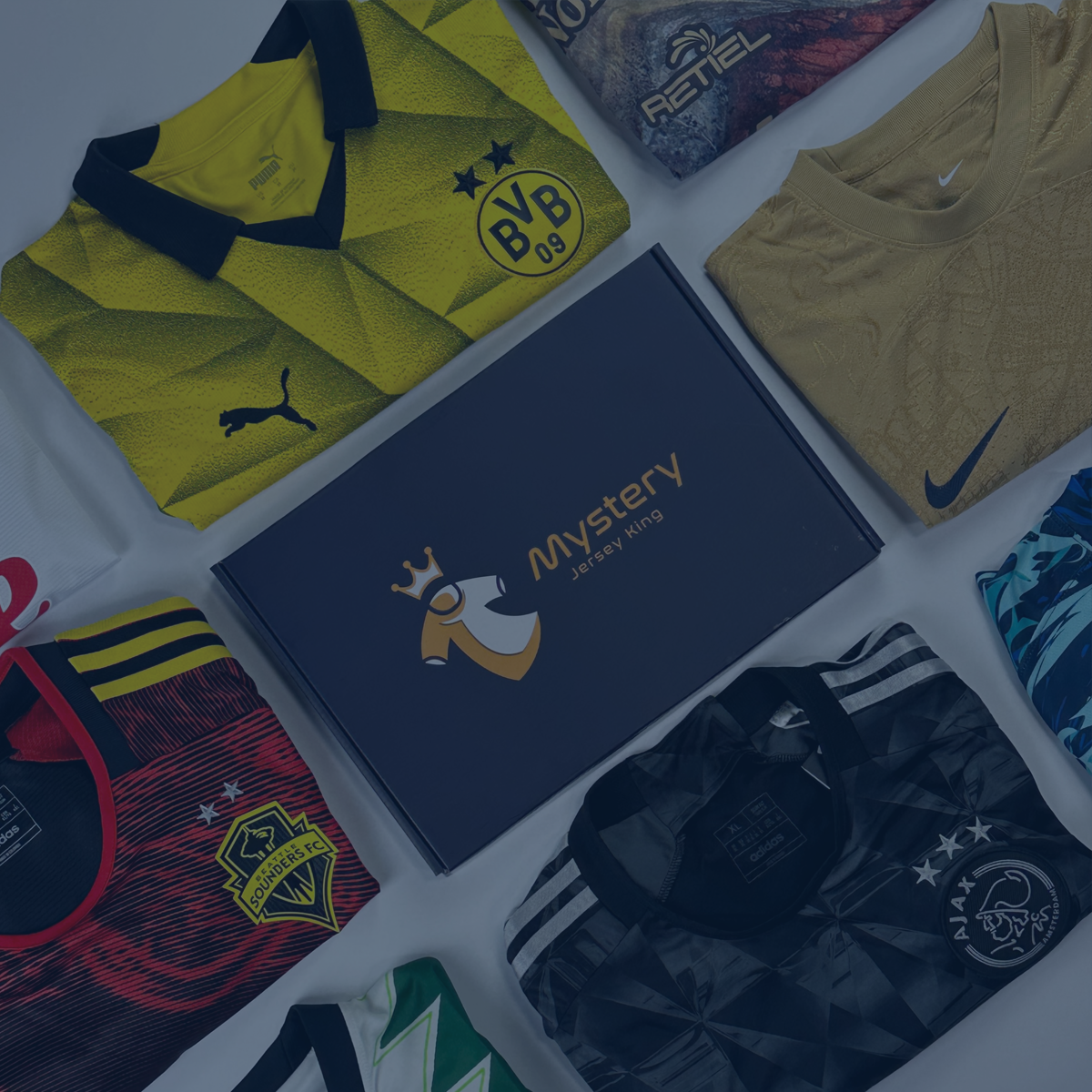
The other route is to let the shirt find you. An MJK mystery box sends one genuine football shirt without you knowing which one is coming: any club, any nation, any era, drawn from a supply network that spans more than 50 leagues and 53 countries. Forest shirts appear in the mix regularly, and if you would rather include or avoid particular clubs, you can tell us at checkout.
As seen on BBC Dragons' Den. Co-founder Alex Street pitched Mystery Jersey King on Series 22, and Sara Davies MBE invested £50,000 for 15%. Read the full story here.
Related reads
Frequently Asked Questions
Why do Nottingham Forest play in Garibaldi red?
Forest were founded in 1865 and adopted the colour Garibaldi Red, named for the Italian revolutionary Giuseppe Garibaldi, whose followers were associated with red shirts and who is said to have visited Nottingham in the mid-19th century. The name and colour have defined the club's identity ever since.
Did Nottingham Forest win the European Cup without a shirt sponsor?
Yes. Forest won back-to-back European Cups in 1979 and 1980 under manager Brian Clough while wearing shirts with no sponsor on the chest, since shirt sponsorship was not yet standard in English football. It makes those two shirts genuinely unique among major European trophies of the modern era.
Who was Nottingham Forest's first shirt sponsor?
Panasonic became Forest's first shirt sponsor in 1980, shortly after the club's second European Cup win. It marked the end of the unsponsored era that had defined Clough's greatest triumphs and the start of a long line of sponsors, including Wrangler, Skol, Shipstones, Labatt's and Pinnacle, that followed over the decades.
Did Nottingham Forest influence Arsenal's colours?
Yes. Several early Arsenal players had come from Nottingham Forest and brought their old red Forest shirts with them when the club, then known as Dial Square, was founded in 1886. That hand-me-down kit is the direct reason Arsenal play in red to this day, one of several clubs Forest's early adoption of red went on to influence.
Which Nottingham Forest sponsors help date a shirt?
Shipstones, a local Nottingham brewery, sponsored the shirt from 1987 into the early 1990s, followed by Labatt's through the mid-90s and Pinnacle Insurance from 1997 to 2003. More recently the club has carried sponsors including UNHCR, the United Nations refugee agency, each marking a distinct chapter of the club's history.
Are Nottingham Forest shirts often faked?
Forest are a well-collected club, particularly for their unsponsored European Cup era shirts, so authenticity matters. The sponsor and maker pairing is the fastest way to check a shirt's era, followed by close inspection of the badge stitching, the neck and wash labels, and the fabric for the period.
How does a mystery football shirt box work?
You pick your size, and Mystery Jersey King picks the shirt. One genuine football shirt arrives without you knowing which one is coming: any club, any nation, any era, drawn from a supply network spanning more than 50 leagues and 53 countries. MJK has shipped over 100,000 orders and is rated highly across more than 1,000 reviews.
Mystery Jersey King
Your Next Garibaldi Classic, Unopened.
The best shirts in any collection are the ones you did not go looking for. Every MJK box puts one genuine football shirt through your door without you knowing which one is coming: any club, any nation, any era.
100,000+ orders shipped. Rated 4.7/5 from 1,000+ reviews. Shipping to 53 countries. As seen on BBC Dragons' Den.


Leave a comment
This site is protected by hCaptcha and the hCaptcha Privacy Policy and Terms of Service apply.