
In this article
Football shirts have quietly become collector's items, with the rarest match-worn jerseys fetching extraordinary sums and even standard retail shirts from landmark tournaments climbing steadily in value over the years. The 2026 World Cup, the biggest in history and packed with once-in-a-generation stories, has produced a crop of shirts that collectors will still be talking about in a decade. So which of them will be worth the most in 2036? Here is our honest assessment of what drives shirt value, and which 2026 kits have the strongest case.
What Actually Makes a Shirt Appreciate
Before naming names, it is worth understanding what actually drives a football shirt's long-term value, because it is rarely the design alone. The strongest driver is significance: a shirt tied to a defining moment, a legendary player's farewell, a historic first, or a trophy lift, carries a story that never goes away. Scarcity matters too, whether through limited production, a nation's rare appearance, or a design element used only once. And provenance, a match-worn or signed shirt, sits in an entirely different league to a retail version.
Design quality plays a part, but mostly as a multiplier. A beautiful shirt from a forgettable campaign will always trail an average shirt from a legendary one. The lesson from decades of collecting is clear: buy the story, not just the fabric. With that framework in mind, here are the 2026 shirts with the strongest long-term cases.

The Messi Farewell Shirt
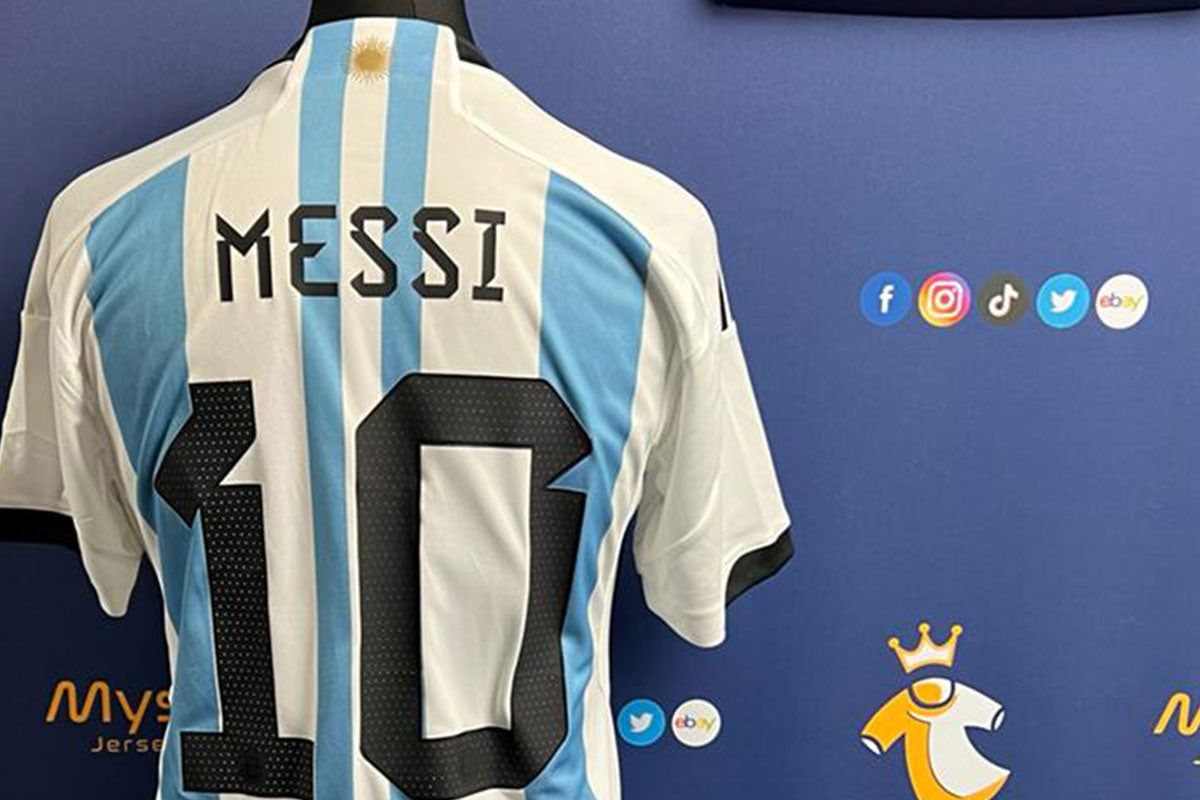
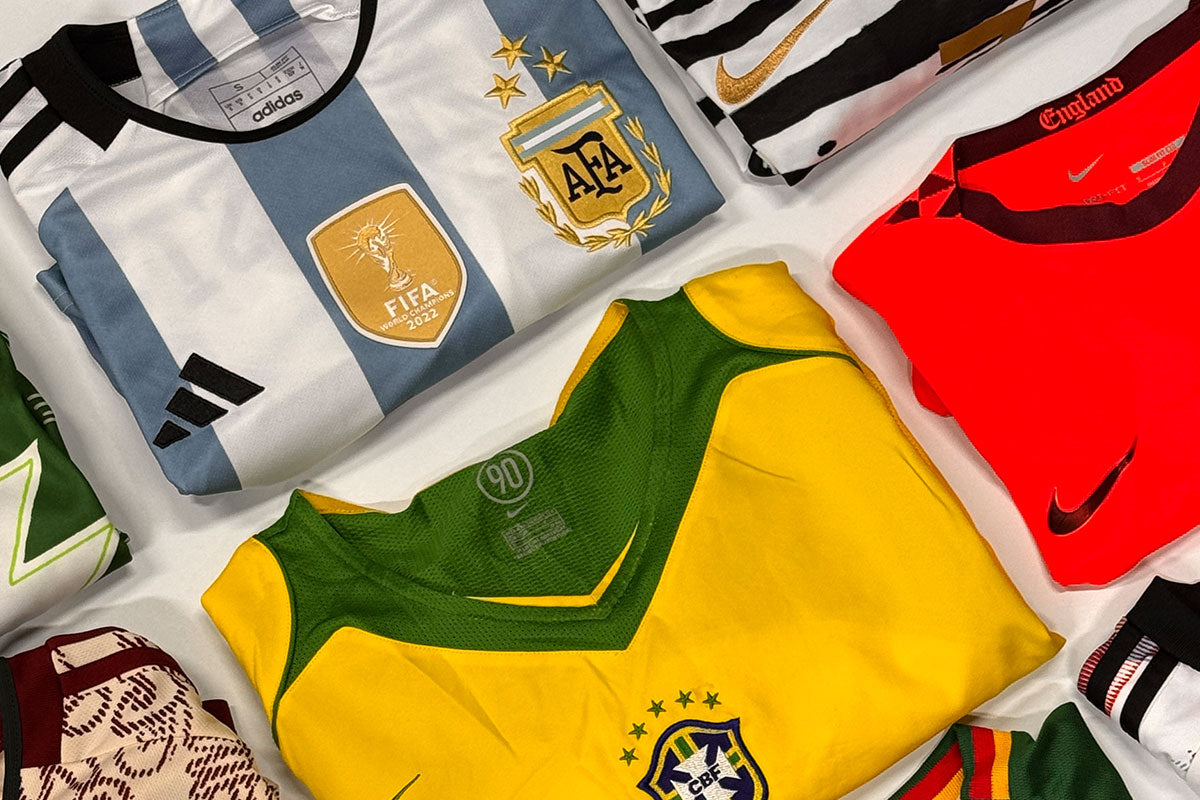
If you buy one 2026 shirt as a long-term hold, this is the obvious candidate. Argentina's three-tone gradient home, worn by Lionel Messi in what is almost certainly his final World Cup, ticks every box that drives shirt value. It is the consensus best design of the tournament, a subtle gradient across the famous sky-blue and white stripes paying tribute to Argentina's three World Cup titles. It carries the gold badge of the defending champions. And it is inseparably tied to the closing chapter of the greatest player of his generation.
The precedent is compelling. Shirts associated with a legend's final tournament acquire a permanence that ordinary kits never do, because they mark an unrepeatable moment in football history. Messi has already broken the all-time World Cup scoring record in this tournament, adding another layer of historical weight. In ten years, when a generation looks back on the last time Messi played at a World Cup, this is the shirt they will picture. That is precisely the kind of association that holds and grows value.
The Winner's Shirt
The single most reliable rule in football shirt collecting: the champion's shirt endures. Whichever nation lifts the trophy at MetLife Stadium, their 2026 home shirt instantly becomes a permanent piece of football history, sought after for decades by that nation's supporters and by collectors of tournament-winning kits. Look at how the 1970 Brazil, 1986 Argentina and 1998 France shirts are treasured today; the 2026 winner joins that lineage.
This is the safest long-term bet, and the reason so many collectors wait for the final before buying. The catch, of course, is that everyone else has the same idea, so demand for the winner's shirt spikes immediately after the final. If you want the champion's shirt at a sensible price, the smart move is to have backed the right team early, which is part of the appeal of following a nation through the tournament rather than waiting to see who wins.

The Historic Firsts
Scarcity and novelty drive value, and 2026 produced several genuine firsts. Brazil's away shirt is the first Brazil national team kit to carry the Jordan Jumpman instead of the Nike Swoosh, a landmark collaboration that crosses over into sneaker and streetwear collecting, two markets with deep pockets and long memories. A first-of-its-kind Jordan national team shirt has a collectability that reaches well beyond football, and Brazil's shock early exit does nothing to diminish that novelty.
Germany's home shirt carries a different kind of finality: it is the last Germany kit Adidas will ever make, ending one of the longest and most iconic partnerships in football. A shirt marking the end of an era has built-in historical significance, and Germany's absence from the last eight, for the first time alongside Brazil in World Cup history, ironically makes 2026 an even more notable chapter in their story. Both of these are shirts whose significance is baked in regardless of results.
The Underdog Shirts
Some of the best long term value hides in the shirts of the nations that made history rather than won it. Cape Verde and Curacao, among the smallest nations ever to reach a World Cup, produced debut shirts that are already scarce and carry genuine one-off historical significance. Curacao's pastel away was one of the most admired designs of the tournament, winning more fan votes than any other away kit, and Cape Verde's shirt is permanently tied to the first World Cup the nation ever played in. There will only ever be one of those.
These shirts were produced in far smaller quantities than those of the giants, which is exactly the scarcity that drives value over time. In ten years, a Cape Verde 2026 shirt will be a genuinely hard-to-find piece of a beloved World Cup story, while Argentina and England shirts will remain relatively plentiful. For collectors who enjoy hunting the overlooked, the debutant nations of 2026 are where the quiet value lies.
Norway belong in this conversation too. Their 2026 home, with the runic detailing, is now the shirt Norway were wearing when they knocked Brazil out of a World Cup on their first appearance since 1998. Nobody was buying that shirt in May. Plenty of people want it now. That is how an underdog shirt becomes a collector's shirt: not through design, but through one night nobody saw coming.
The Design Classics
Finally, there are the shirts that will endure purely because they are magnificent. South Korea's hidden-tiger home, with the white tiger woven into the fabric in tonal camouflage, is one of the cleverest designs in recent World Cup history and will be remembered long after the tournament fades. Japan's off-white away, with its rainbow pinstripes, sold out almost instantly and has become one of the most coveted shirts of the summer. France's glacier-green Statue of Liberty away is a piece of genuine storytelling.
None of these nations may lift the trophy, but great design has its own longevity, and shirts like these become the ones collectors seek out precisely because they represent the creative high-water mark of an era. For a fuller picture of where every shirt ranks on design, our living 2026 World Cup kit tier list covers the whole tournament.
An Honest Word on Shirts as Investments
A note of realism is warranted. While the football shirt market has grown enormously and standout pieces have appreciated significantly, most retail shirts do not turn into windfalls, and predicting which ones will is genuinely difficult. Condition matters enormously, as does keeping tags and packaging, and the market can be volatile. Anyone buying purely as a financial investment should understand they are speculating, not saving.
The far better approach, and the one every seasoned collector will tell you, is to buy shirts you love, from moments that meant something to you. If a shirt appreciates, that is a bonus; if it does not, you still own something that brings you joy every time you wear it or look at it. The 2026 World Cup gave us extraordinary stories, and the shirts that will mean the most to you in ten years are the ones tied to the matches you actually watched and remember.
Start Your 2026 Collection
Here is the awkward truth buried in everything above: almost nobody bought the shirt that ended up mattering. Nobody was buying Norway in May. Nobody bought Senegal in 2002 or South Korea in 2002 expecting a semi-final. The shirts that turn out to be worth something are, over and over, the ones nobody set out to buy.
Which is a decent argument for not choosing. Every MJK mystery box sends one authentic football shirt without you knowing which one is coming, drawn from a global rotation spanning 50-plus leagues and 53 countries: club sides, national teams, retro kits, and the occasional shirt from a nation you have never given a second thought to. You pick your size. MJK picks the shirt.
Around one in seven MJK customers who order during a tournament window tells us they ended up actively following a nation they had never paid attention to before, simply because that nation's shirt arrived in their box. Some of those shirts turn out to be worth money. All of them turn out to be worth something.
MJK has shipped more than 100,000 orders to date, rated 4.7/5 from 1,000+ reviews, shipping to 53 countries, with every shirt authenticated before it ships. For the classics that have already proved the point, the Senegal 2002s and the Germany 1990s of the world, the retro football shirts collection is where they turn up.

As seen on BBC Dragons' Den. Mystery Jersey King appeared on BBC Dragons' Den and secured investment from Sara Davies. Every shirt in the MJK collection is authenticated before it ships. Read the full story here.
Related World Cup reads
Frequently Asked Questions
Which 2026 World Cup shirt will be worth the most in 10 years?
The strongest candidate is Argentina's three-tone gradient home, worn by Lionel Messi in what is almost certainly his final World Cup. It combines the consensus best design of the tournament, the defending champions' gold badge, and an inseparable link to the closing chapter of a legendary career. The winner's shirt, whoever lifts the trophy, is the other reliable long-term hold.
What makes a football shirt increase in value?
Significance is the biggest driver: a shirt tied to a defining moment, a legend's farewell, a historic first or a trophy lift carries a story that never fades. Scarcity matters too, through limited production or a nation's rare appearance, and provenance, such as match-worn or signed shirts, sits in a different league entirely. Design quality helps, but mostly as a multiplier on significance.
Why is the Brazil 2026 away shirt significant?
Brazil's 2026 away is the first Brazil national team shirt to carry the Jordan Jumpman logo instead of the Nike Swoosh, a landmark collaboration. That first-of-its-kind status gives it a collectability reaching well beyond football into sneaker and streetwear markets. Its novelty is baked in regardless of Brazil's results at the tournament.
Is the Norway 2026 shirt a good collector's item?
Norway's 2026 home has a strong case. It is the shirt Norway wore when they knocked Brazil out of the World Cup at their first tournament since 1998, reaching the quarter-finals before losing to England. Shirts tied to a single unrepeatable upset tend to appreciate precisely because nobody was buying them beforehand, which keeps early supply low and later demand high.
Are underdog nations' shirts good collector's items?
They can be excellent, precisely because they are scarce. Debut shirts from nations like Cape Verde and Curacao, among the smallest ever to reach a World Cup, were produced in far smaller quantities than those of the giants. In a decade they will be genuinely hard to find, while shirts from major nations remain plentiful. Scarcity is one of the strongest long-term value drivers.
Should I buy football shirts as an investment?
With caution. While the shirt market has grown and standout pieces have appreciated, most retail shirts do not turn into windfalls, and predicting which will is genuinely difficult. Condition and packaging matter enormously and the market can be volatile. The better approach is to buy shirts you love from moments that meant something to you, treating any appreciation as a bonus.
Does the winner's shirt always become valuable?
The champion's shirt is the most reliable long-term hold in shirt collecting. Winning kits like Brazil 1970, Argentina 1986 and France 1998 remain treasured decades on. The catch is that demand spikes immediately after the final, so the shirt becomes harder and pricier to obtain. Backing a team before they win is the smarter route to owning a champion's shirt.
How should I store a shirt I want to keep long-term?
Condition is one of the biggest factors in long-term value. Keep the shirt out of direct sunlight, store it folded flat or on a padded hanger rather than a wire one, avoid high heat when washing, and retain any tags and original packaging if the shirt is unworn. A shirt kept in excellent condition will always be worth considerably more than the same shirt worn and faded.
Mystery Jersey King
Nobody Was Buying Norway In May.
The shirts that end up worth something are almost never the ones people set out to buy. Every MJK box puts one genuine football shirt through your door without you knowing which one is coming: any club, any nation, any era. That is not a limitation. That is the whole point.
100,000+ orders shipped. Rated 4.7/5 from 1,000+ reviews. Shipping to 53 countries. As seen on BBC Dragons' Den.


Leave a comment
This site is protected by hCaptcha and the hCaptcha Privacy Policy and Terms of Service apply.