The Short Version
The best European club shirts combine a strong identity with a design people recognise at a glance. Ajax, AC Milan, Juventus, Barcelona and Real Madrid lead our list, with Inter, Bayern, Dortmund, Roma and Atletico completing the ten, and each one comes with an era worth looking for.
In this article
English clubs get plenty of attention, but some of the most beautiful shirts in the game come from across the Channel. European clubs have strong colour identities, devoted supporters and, in many cases, more than a century of design to explore. For a collector, that means a lot of choice and a lot of stories.
This is a shortlist of ten clubs whose shirts are well worth having. For each one you will find where the colours come from, a note on the eras worth looking for, and a practical tip for a collector. They are our picks, not a scientific ranking. Taste matters in this hobby, and the best shirt is the one you will enjoy owning.
The Ten at a Glance
| Club | Nickname | Home colours | Founded |
|---|---|---|---|
| Ajax | De Godenzonen (Sons of the Gods) | White with a broad red stripe | 1900 |
| AC Milan | I Rossoneri | Red and black stripes | 1899 |
| Juventus | I Bianconeri, La Vecchia Signora | Black and white stripes | 1897 |
| Barcelona | Blaugrana | Blue and claret stripes | 1899 |
| Real Madrid | Los Blancos | All white | 1902 |
| Inter | I Nerazzurri | Black and blue stripes | 1908 |
| Bayern Munich | Die Roten (The Reds) | Red with white trim | 1900 |
| Borussia Dortmund | Die Schwarzgelben (The Black and Yellow) | Yellow and black | 1909 |
| AS Roma | I Giallorossi | Carmine red and golden yellow | 1927 |
| Atletico Madrid | Rojiblancos, Colchoneros | Red and white stripes | 1903 |
Ten European Clubs Worth Owning
1. Ajax
Ajax's home shirt is one of the most instantly recognisable designs in football: white with a broad vertical red stripe over the chest and back. The club adopted it in 1911 after being forced to change its colours because another team already had identical ones, and it has barely changed since.
Eras to look for: Ajax won the European Cup three years running from 1971 to 1973, and the Champions League again in 1995. Umbro made the club's shirts from 1989 to 2000, so the 1995 winning season sits in that era, and Adidas has been the supplier since 2000.
Collector's tip: Ajax's away and third shirts are often as interesting as the home design, so do not overlook them.

2. AC Milan
Milan were founded in 1899 by an Englishman, Herbert Kilpin, and the red and black stripes have been the home shirt ever since. The club's nickname, I Rossoneri, simply means "the red and black". Milan also has a small place in kit history: between 1979/80 and 1980/81 it became the first Italian club to put players' surnames above the number on the shirt.
Eras to look for: Milan won the European Cup in 1989, 1990 and 1994 and the Champions League in 2003 and 2007. Adidas made the shirts for twenty years from 1998 to 2018, which covers both of those 2000s wins, and Puma has supplied them since 2018.
Collector's tip: The stripes are simple and hard to get wrong, so Milan shirts from almost any era tend to look good. Check the stripe width and the badge style against a known genuine example.

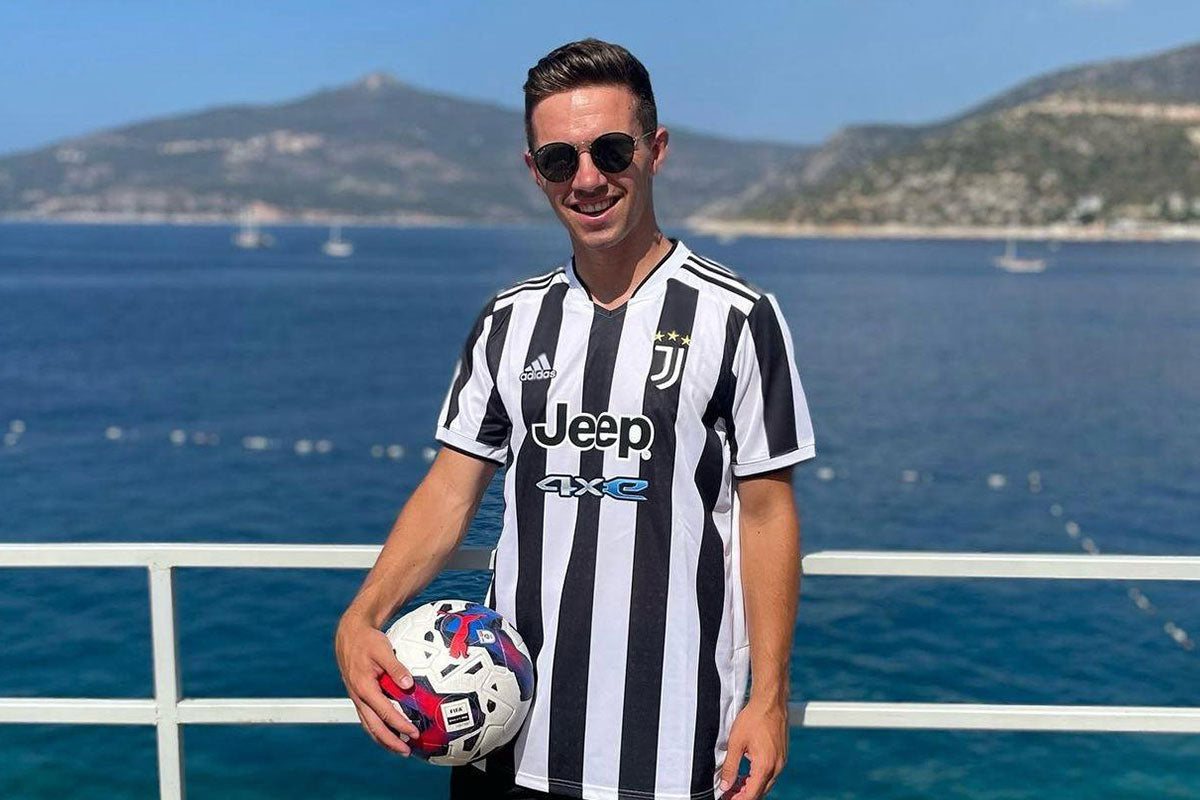
3. Juventus
Juventus were founded in 1897, and they did not always wear black and white. The earliest shirts were pink, made by the father of one of the players, but constant washing faded the colour so badly that new ones were needed. A team member with English connections arranged for striped shirts to be sent from Nottingham, inspired by Notts County, and the black and white stripes have been the club's identity ever since. Juventus were also the first Italian club to wear three gold stars on the shirt.
Eras to look for: The club won the European Cup in 1985 and the Champions League in 1996, and shirts from the 1990s are a natural place to start if you want something from the club's most successful era of that decade.
Collector's tip: Juventus's bold stripes make shirts easy to display, but compare the stripe pattern and sponsor print carefully, since details vary a lot between seasons.

4. Barcelona
The blue and claret stripes, known as blaugrana, are among the most famous colours in the sport. The club was founded on 29 November 1899, and its history is closely tied to its identity, including a period under Franco when it was forced to change its name and remove the Catalan flag from its crest. After democracy returned in 1974, the original name and crest were restored.
Eras to look for: Barcelona have won the Champions League five times, including the 2006 final against Arsenal, the continental treble in 2009 and a second treble in 2015. Shirts from those seasons are a natural place to start.
Collector's tip: Barcelona's shirts change styling often, so there is plenty of variety to chase. Check the season carefully, since the stripes and collars differ from year to year.
5. Real Madrid
Madrid chose white in honour of Corinthian, a famous English amateur side that club president Juan Padros had come across on his travels. The club, founded in 1902, has worn white ever since, and its nickname Los Blancos simply means "the whites". Real Madrid also became the first Spanish team to wear numbered shirts, in 1947.
Eras to look for: Hummel supplied the shirts from 1985 to 1989 and Kelme from 1994 to 1998, and Adidas has supplied them since 1998. Real Madrid are the most successful club in the history of the European Cup and Champions League, so shirts from winning seasons carry real weight.
Collector's tip: The clean white design means condition matters. Look carefully for yellowing, marks and collar wear in photos.
6. Inter
Inter was founded on 9 March 1908 when a group of players left Milan to form a club that would sign foreign players as well as Italian ones, which is where the name comes from. According to tradition, the black and blue stripes represent the night sky, as the club was founded at 11:30 at night, and blue was chosen as the opposite of the red worn by their Milan rivals. For one season, 1928/29, the Fascist regime forced the club to wear white with a red cross, before the stripes returned.
Eras to look for: Inter won the European Cup in 1964 and 1965, and the Champions League in 2010 as part of an Italian treble.
Collector's tip: Inter's away and third shirts regularly produce interesting designs, so they are a good way into the club's collection.

7. Bayern Munich
Bayern were founded on 27 February 1900 and wore white shirts with black shorts until 1905. Since 1974 the home kit has been predominantly red with white trim, made by Adidas throughout, which is one of the longest-running kit partnerships in the game. Bayern have also experimented over the years, including red and blue striped shirts at various points and an all-navy kit in 1997.
Eras to look for: The club won the European Cup three years in a row in 1974, 1975 and 1976, the start of the all-red era, and shirts from the 1970s and 1980s have a distinctive look.
Collector's tip: Bayern's long relationship with Adidas means you can follow the evolution of Adidas design across decades through one club.

8. Borussia Dortmund
Dortmund were founded on 19 December 1909 and first wore blue and white stripes with red sashes. The black and yellow stripes arrived in 1913 and became so closely linked with the club that its nickname is Die Schwarzgelben, "the black and yellow". The name Borussia comes from a local brewery.
Eras to look for: Dortmund won the Champions League in 1997, in the middle of a ten-year period when Nike made the club's shirts from 1990 to 2000. Puma has supplied them since 2012.
Collector's tip: Yellow shows marks and fading more than most colours, so look carefully at the condition of older shirts.
9. AS Roma
Roma was formed on 7 June 1927 through a merger of three Roman clubs, and its colours, carmine red and golden yellow, are the traditional colours of Rome itself and appear on the city's seal. The badge shows the she-wolf nursing Romulus and Remus, from the city's founding myth. Since 2017 the club has retired the number 10 shirt in honour of Francesco Totti.
Collector's tip: Roma's third shirts have produced some memorable designs, so they are worth a look.

10. Atletico Madrid
Atletico were founded on 26 April 1903 as a branch of Athletic Bilbao, and they began in blue and white like their parent club. By 1910 they had switched to red and white stripes, and two stories explain why. One is that the stripes were cheap, because the same cloth was used for mattresses and offcuts were easy to turn into shirts, which is why the club is nicknamed Colchoneros, "the mattress makers". The other is that a club official sent to England to buy Blackburn Rovers shirts came back with Southampton's red and white ones instead.
Eras to look for: Nike has supplied the shirts since 2001, so modern Atletico shirts form a long, consistent run, and older shirts from the Meyba, Puma and Reebok eras look very different.
Collector's tip: The stripes look good folded or framed, which makes Atletico shirts a good choice for display.

European shirts are the best way to surprise yourself. You start with a club you know and end up falling for a team you had never really looked at.
- Jamie King, co-founder, Mystery Jersey King
Honourable Mentions
Ten is never enough. A few more clubs deserve a look if you want to go further: Benfica in red, Porto in blue and white stripes, PSV Eindhoven, and Celtic in green and white hoops. Each has a strong identity and shirts that look good on a wall.
How to Choose
- Start with the colours. You will see the shirt every time you open the wardrobe or look at the wall, so pick colours you like.
- Pick a story. A shirt tied to a famous season or a club's history is more satisfying to own than a random one.
- Think about the era. Retro designs have a character modern shirts often lack, while current kits are easier to find in good condition.
- Consider away and third shirts. They are often more unusual than the home shirt and can be more interesting to own.
- Be realistic about size. Older shirts often fit differently from modern ones, so check measurements rather than relying on the size label.
What to Check Before You Buy
- Is it genuine? Popular European shirts are copied. Our guide to the most faked football shirts shows what to look for, and how manufacturers mark a genuine shirt explains the tags and markings. For older shirts, see how to tell if a retro football shirt is genuine.
- Is it an original or a remake? Some classic designs have been reissued, so ask which one you are getting.
- What condition is the sponsor print in? Printed sponsors and badges on older shirts can crack or peel.
- How will you look after it? How to store and display a football shirt collection and 15 tips to cultivate your football shirt collection cover care and display.
Where to Find One
Mystery Jersey King draws shirts from a supply network spanning more than 50 leagues and 53 countries, so European clubs turn up often. If you want to pick a specific era, browse the retro football shirts collection or read our list of the best retro football shirts of all time. If you would rather be surprised, a mystery football shirt box delivers one genuine shirt, with the club chosen for you. Our mystery football shirts are a good way to start a European collection without needing to know exactly what you want.
As seen on BBC Dragons' Den. Co-founder Alex Street pitched Mystery Jersey King on Series 22, and Sara Davies MBE invested £50,000 for 15%. Read the full story here.
Related reads
Frequently Asked Questions
Which European club has the best football shirts?
It is a matter of taste, but Ajax, AC Milan, Juventus, Barcelona and Real Madrid are among the most admired for their strong identities and long history of memorable designs.
Are European football shirts worth collecting?
Many collectors enjoy them because of the colours, the history and the variety of designs. Nobody can promise what a shirt will be worth later, so buy ones you like.
Should I start with a home, away or third shirt?
Home shirts show a club's identity most clearly, while away and third shirts are often more unusual. Many collectors start with the home shirt and add the others over time.
Why do Juventus wear black and white stripes?
Juventus originally wore pink shirts that faded badly with washing. Around 1901 to 1902 the club arranged for striped shirts to be sent from Nottingham, inspired by Notts County, and the black and white stripes became the club's identity.
Why does Atletico Madrid wear red and white stripes?
There are two stories. One says the stripes were cheap because the same cloth was used for mattresses, which gave the club the nickname Colchoneros. The other says a club official bought Southampton's red and white shirts in England instead of the Blackburn Rovers shirts he intended to buy.
How can I tell if a European shirt is genuine?
Check the badge, the tags, the sponsor print and the overall finish, and buy from a seller who specialises in genuine football shirts. Our guides to the most faked football shirts and to manufacturer markings explain what to look for.
Can I get a European club shirt in a mystery box?
Yes, European clubs are among the shirts that can turn up in a box, though the club is always a surprise.
How does a mystery football shirt box work?
You pick your size, and Mystery Jersey King picks the shirt. One genuine football shirt arrives without you knowing which one is coming: any club, any nation, any era, drawn from a supply network spanning more than 50 leagues and 53 countries. MJK has shipped over 100,000 orders and is rated 4.7 out of 5 from more than 1,000 reviews.
Mystery Jersey King
Start Your European Collection
Every MJK box puts one genuine football shirt through your door without you knowing which one is coming: any club, any nation, any era.
100,000+ orders shipped. Rated 4.7/5 from 1,000+ reviews. Shipping to 150 countries. As seen on BBC Dragons' Den.


Leave a comment
This site is protected by hCaptcha and the hCaptcha Privacy Policy and Terms of Service apply.