


The Short Version
Football's shirt numbers are not random. They began as a simple map of the pitch, from the goalkeeper's 1 to the left winger's 11, and each number came to carry the identity of a position and the legends who wore it. Here is what every number from 1 to 11 traditionally means, where the system came from, and why a 9 or a 10 still says so much about a player.
In this article
- Where shirt numbers came from
- Numbers 1 to 3: the goalkeeper and full-backs
- Numbers 4 to 6: the spine of the team
- Number 7: the winger and the icon
- Numbers 8 and 9: the engine and the finisher
- Numbers 10 and 11: the playmaker and the wing
- How squad numbers changed everything
- Why numbers matter to collectors
- Owning a piece of the game
- Frequently asked questions
Ask a football fan what a number 10 is, and they will not describe a shirt. They will describe a type of player: creative, gifted, the one who makes the team tick. That is the quiet genius of football's numbering system. What began as a simple way to tell players apart became a language, where each number from 1 to 11 carries the meaning of a position and the weight of the legends who wore it. Here is what every number traditionally means, and where it all came from.
Where Shirt Numbers Came From
Shirt numbers were introduced to help spectators and reporters identify players, and the first numbered match in English football is generally recognised as the 1933 FA Cup final between Everton and Manchester City. The system that followed was beautifully logical: players were numbered from the back of the pitch to the front, following the popular formation of the day.
That formation was the old 2-3-5, the pyramid, and the numbers mapped straight onto it. The goalkeeper was 1, the two full-backs 2 and 3, the three half-backs 4, 5 and 6, and the five forwards 7 to 11. As formations evolved, through the 4-4-2 and beyond, the players moved around the pitch but the meaning of the numbers largely stuck. That is why, to this day, a supporter knows what to expect from a number 9 before the player has even touched the ball.

Numbers 1 to 3: the Goalkeeper and Full-Backs
The number 1 belongs to the goalkeeper, the last line of defence and, in the original team sheet, the first name on it. It remains the most rigidly observed of all the traditional numbers: even in the modern squad-number era, the first-choice goalkeeper almost always wears 1. The great keepers, from Gordon Banks to Gianluigi Buffon and Manuel Neuer, have all carried it.
Numbers 2 and 3 are the full-backs, 2 on the right and 3 on the left, following the rule that within each line the numbers run from right to left. These are the defenders positioned wide, tasked with stopping the opposition wingers and, increasingly in the modern game, overlapping to support the attack. Legendary full-backs like Cafu and Roberto Carlos made the 2 and the 3 their own.
Numbers 4 to 6: the Spine of the Team
The numbers 4, 5 and 6 form the central spine, and their exact meaning shifted as football's formations evolved. In the modern game, 4 and 5 are most associated with the two centre-backs, the defenders in the middle who win headers and organise the back line, worn by the likes of Sergio Ramos and Rio Ferdinand. The number 5 has a particularly rich history, having once denoted the central pivot before settling into central defence.
The number 6 has become the shirt of the defensive midfielder, the player who sits in front of the back four to break up attacks and start moves, though it is also worn by centre-backs. It is a number that has grown in prestige as the holding-midfield role has become central to how top teams play. Together, 4, 5 and 6 are the shirts of the players a team is built around defensively.
Number 7: the Winger and the Icon
Traditionally the number 7 is the right winger, a fast, skilful wide attacker whose job is to beat defenders and deliver crosses or cut inside to score. But over time the 7 has grown into something bigger than a position. It has become football's icon shirt, the number of flair and stardom, carried by George Best, Eric Cantona, David Beckham and Cristiano Ronaldo, particularly at Manchester United where it took on almost mythical status.
That is what makes the 7 special: it carries an expectation of brilliance. When a club hands a player the number 7, it is often making a statement about the talent and the burden that comes with it. We will explore the shirt and its greatest wearers in a dedicated look at the most iconic number 7 shirts in football.

Numbers 8 and 9: the Engine and the Finisher
The number 8 is the classic central midfielder, the box-to-box engine who links defence and attack, contributing at both ends of the pitch. It is a number associated with complete midfielders like Steven Gerrard and Andres Iniesta, players whose energy and quality drive a team from the middle of the park. The 8 rarely gets the glamour of the attacking numbers, but it is one of the most respected shirts in the game.
The number 9 is the centre-forward, the team's focal point in attack and its primary goalscorer. It is one of football's most coveted shirts, worn by the great strikers, from Ronaldo and Alan Shearer to Harry Kane and Erling Haaland. To be a club's number 9 is to carry the responsibility of putting the ball in the net, and the shirt has a weight and prestige that reflects it. It is the shirt of the finisher, pure and simple.
Numbers 10 and 11: the Playmaker and the Wing
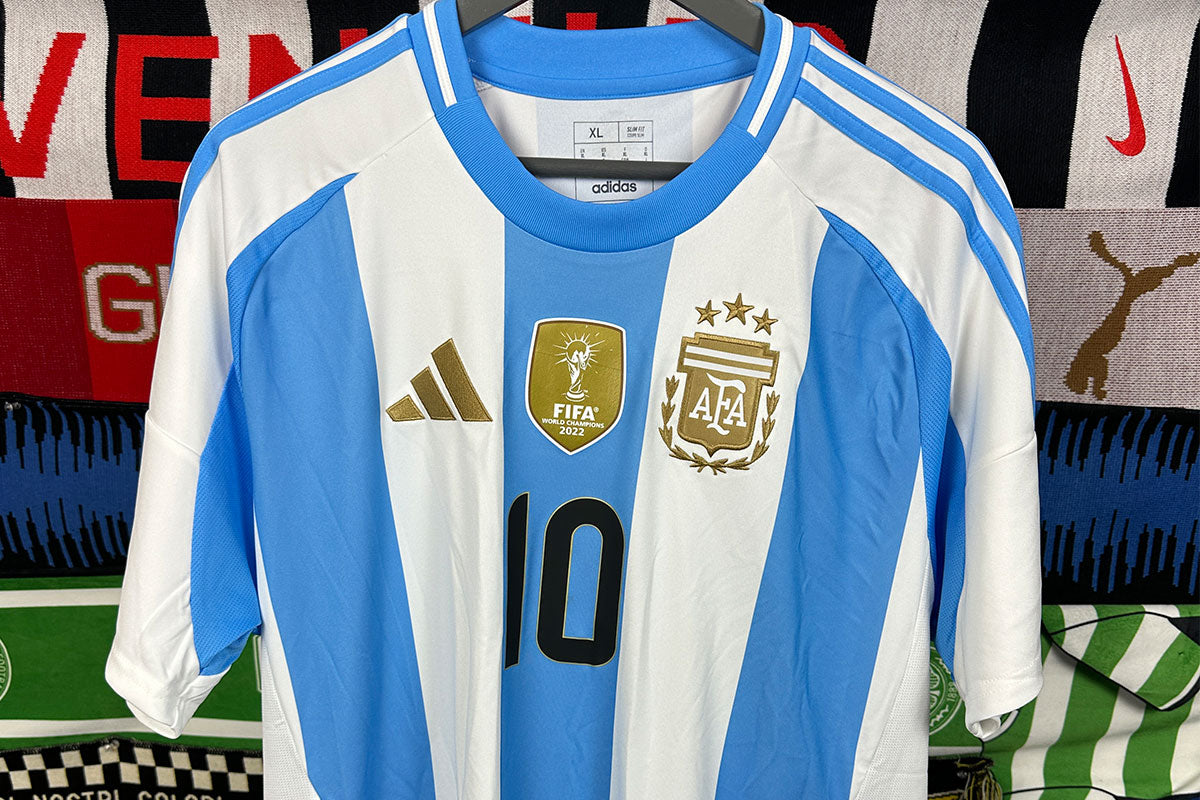
If any number transcends its position, it is the 10. Traditionally the attacking midfielder or second striker, the 10 has become the shirt of the playmaker, the creative talisman who operates between midfield and attack and makes the team play. It is the most romantic number in football, worn by Pele, Diego Maradona, Zinedine Zidane and Lionel Messi. To wear the 10 is to be trusted with a team's imagination.
The number 11, like the 7, is a winger's shirt, traditionally the left winger who mirrors the 7 on the opposite flank. It has been worn by wonderful wide players from Ryan Giggs to Mohamed Salah, often modern forwards who cut inside from the left to devastating effect. Between them, the 7, 10 and 11 are the shirts of a team's most expressive attacking talents, which is exactly why they are the numbers collectors and fans gravitate to most.
How Squad Numbers Changed Everything
The strict 1-to-11 system began to loosen in the 1990s, when football widely adopted squad numbers. Instead of the eleven starters wearing 1 to 11 and substitutes taking higher numbers, each player was assigned a fixed number for the whole season, keeping it whether they started or sat on the bench. This is why you now see players in shirts numbered into the 20s, 30s and beyond.
Squad numbers weakened the link between number and position, but they did not break the meaning. Players still covet the traditional shirts: strikers want the 9, playmakers want the 10, goalkeepers want the 1. And some players turned high numbers into personal icons, from Phil Foden's 47 to the many stars who have made an unusual number their own. The tradition endures precisely because those original numbers still carry so much meaning, a theme we explore across our guides to the most iconic Premier League shirts from 1992 to today.
Say "he's a proper number 10" and every football fan knows exactly what you mean without another word. That is the magic of the numbering system: it turned eleven digits into a whole language of the game.
- Jamie King, co-founder, Mystery Jersey King
Why Numbers Matter to Collectors
For collectors, the number on the back is a huge part of a shirt's story. A plain shirt is a design; a shirt with the right name and number is a piece of a specific player's history. A number 7 tied to Cantona, a number 10 tied to Maradona, a number 9 tied to Shearer: these are the details that turn a kit into a genuine collector's item and can transform its value.
Even without a famous name, the number tells you about the shirt. It signals the era, since printing styles and fonts changed over the decades, and it connects the shirt to a position and a way of playing. Understanding what the numbers mean makes you a sharper collector, and it deepens the pleasure of every shirt you own. We look at the shirts that carried these numbers best in our guide to the greatest Premier League away kits ever made.
Owning a Piece of the Game
Genuine shirts carrying the great numbers surface regularly, and the retro football shirts collection is full of kits tied to specific players, positions and eras.
The other route is to let the game surprise you. An MJK mystery box sends one genuine football shirt without you knowing which one is coming: any club, any nation, any era, drawn from a supply network spanning more than 50 leagues and 53 countries. You never know which number, and which story, is about to arrive at your door.
As seen on BBC Dragons' Den. Co-founder Alex Street pitched Mystery Jersey King on Series 22, and Sara Davies MBE invested £50,000 for 15%. Read the full story here.
Related reads
Frequently Asked Questions
What do football shirt numbers 1 to 11 mean?
In the traditional system, each number maps to a position: 1 goalkeeper, 2 right-back, 3 left-back, 4 and 5 centre-backs, 6 defensive midfielder, 7 right winger, 8 central midfielder, 9 centre-forward, 10 attacking midfielder or playmaker, and 11 left winger. The numbers ran from the back of the pitch to the front, based on the old 2-3-5 formation.
Why does the goalkeeper wear number 1?
The goalkeeper wears number 1 because the original system numbered players from the back of the pitch forward, making the last line of defence the first number, and because the keeper was traditionally the first name listed on the team sheet. It remains the most consistently observed number, with first-choice goalkeepers still almost always wearing 1.
Why is the number 10 so special in football?
The number 10 traditionally belongs to the attacking midfielder or playmaker, the creative player who links midfield and attack. Over time it became football's most romantic shirt, worn by legends like Pele, Maradona, Zidane and Messi. To wear a team's 10 is to be trusted as its creative talisman, which gives the number its special status.
Why is the number 7 shirt so iconic?
The number 7 is traditionally the right winger, but it has grown into football's icon shirt, associated with flair and stardom. Legends like George Best, Eric Cantona, David Beckham and Cristiano Ronaldo carried it, especially at Manchester United, giving the 7 an expectation of brilliance that goes far beyond its original position.
When did football start using shirt numbers?
The 1933 FA Cup final between Everton and Manchester City is generally recognised as the first numbered match in English football. The traditional 1 to 11 system followed, based on the popular 2-3-5 formation, and lasted until squad numbers were widely introduced in the 1990s.
Why do players now wear numbers higher than 11?
In the 1990s football adopted squad numbers, giving each player a fixed number for the whole season rather than numbering only the starting eleven 1 to 11. This is why players now wear numbers into the 20s, 30s and beyond. Traditional numbers still carry their meaning, though, and players often covet the 9, 10 and 1.
How does a mystery football shirt box work?
You pick your size, and Mystery Jersey King picks the shirt. One genuine football shirt arrives without you knowing which one is coming: any club, any nation, any era, drawn from a supply network spanning more than 50 leagues and 53 countries. MJK has shipped over 100,000 orders and is rated highly across more than 1,000 reviews.
Mystery Jersey King
Which Number Is Coming Next?
A 7, a 9, a 10, a legend or a cult hero: you never know which shirt, and which story, is about to arrive. Every MJK box puts one genuine football shirt through your door without you knowing which one is coming.
100,000+ orders shipped. Rated 4.7/5 from 1,000+ reviews. Shipping to 53 countries. As seen on BBC Dragons' Den.


Leave a comment
This site is protected by hCaptcha and the hCaptcha Privacy Policy and Terms of Service apply.