



In this article
- Before you start: check the care label
- How to machine wash a football shirt
- How to hand wash a football shirt
- Washing retro and vintage football shirts
- How to dry a football shirt correctly
- Removing stains from football shirts
- Storing your football shirt collection
- The most common washing mistakes
- Frequently asked questions
Knowing how to wash a football shirt properly, and knowing how to wash a football shirt without causing damage, any collector or fan can learn. Get it wrong and you risk faded colours, cracked prints, shrunken fabric, and peeling badges. Get it right and a well-cared-for football shirt will look as good in ten years as it does today.
This guide covers everything about washing football shirts: machine washing, hand washing, stain removal, drying, and specific advice for retro and vintage shirts that need extra care. Whether you've just received a shirt from an MJK mystery football shirt box, are washing a football shirt after a game, or caring for a shirt that's been in your collection for years, these are the methods that protect your investment.
Before You Start: Check the Care Label
Every football shirt you wash has a care label, usually on the inside near the waist or at the back of the neck. Before washing any shirt, check this label. The symbols tell you the maximum wash temperature, whether the shirt can go in a tumble dryer, and whether it needs to be dry cleaned.
The key symbols to understand:
- Bucket symbol with a number, the maximum wash temperature. A 30 means wash at 30°C or below. Most football shirts should be washed at 30°C.
- Bucket with a hand, hand wash only. This appears on delicate or vintage shirts.
- Circle in a square with an X, do not tumble dry. Almost all football shirts carry this symbol.
- Iron symbol with an X, do not iron. Many modern shirts with prints and badges should not be ironed directly.
As Football Shirt Collective advise: always check for damage before washing. If sponsors and prints look delicate or slightly peeled, do not take risks with a machine wash.
How to Machine Wash a Football Shirt
Washing football shirts in a machine is suitable for most modern football shirts in good condition. Follow these steps to avoid damage:
1. Turn the shirt inside out. This is the single most important step. Turning the shirt inside out protects badges, prints, and sponsor logos from direct friction against the drum and other clothing. Do this every single time without exception.
2. Separate by colour. Wash your football shirts with similar colours. A white shirt washed with a red shirt that bleeds will not come out white. When in doubt, wash the shirt on its own or with whites only.
3. Use a laundry bag. Placing your football shirt in a mesh laundry bag adds an extra layer of protection against friction and prevents badges or buttons from catching on other items in the drum.
4. Select the right cycle. Use a cold or delicate cycle, 30°C maximum, and cooler if the shirt is older or has a lot of print detail. Never use a hot wash. High temperatures cause colours to fade, prints to crack, and fabric to shrink.
5. Use the right detergent. A mild detergent designed for colours or sportswear is ideal. Avoid fabric softeners entirely, they coat the fibres in a way that can cause prints and sponsor logos to degrade over time.
6. Low spin speed. A high spin speed puts significant stress on the fabric and seams. If your machine allows you to reduce the spin speed, do so for football shirts.

How to Hand Wash a Football Shirt
Hand washing a football shirt is the safest method for any shirt and is strongly recommended for older shirts, shirts with plastic or fragile sponsors, or any shirt you are particularly concerned about. It takes slightly longer but removes almost all risk of machine-related damage.
Step-by-step hand washing guide:
- Turn the shirt inside out
- Fill a sink or basin with cold or lukewarm water, no hotter than 30°C
- Add a small amount of mild colour-safe detergent and mix gently
- Submerge the shirt and gently agitate it in the water for 5 to 10 minutes
- Pay extra attention to underarm areas and collars where sweat and odour tend to concentrate
- Rinse thoroughly with clean cold water until no soap remains
- Press excess water out gently, never wring or twist the shirt as this damages the fibres and can distort the shape
- Lay flat or hang to air dry
For stubborn odours, adding a small amount of white vinegar to the rinse water helps neutralise smells without damaging the fabric or prints.
Washing Retro and Vintage Football Shirts
Retro and vintage football shirts require more care than modern shirts. Older fabrics, fragile sponsors, and prints that have been on the shirt for decades are all more vulnerable to damage than their modern equivalents. Here is what changes for older shirts:
Always hand wash where possible. For any retro football shirt with significant value, sentimental or monetary, hand washing in cold water is the right approach. The risk of machine damage is simply not worth it.
Check every detail before washing. Look closely at the badge, any printed elements, sponsor logos, and the fabric itself before putting it near water. If the print is cracking, the badge is lifting, or the fabric has significant wear, washing could accelerate damage. Assess the condition first.
Cold water only. Modern shirts can tolerate 30°C. Vintage shirts should be washed in the coldest water possible. Heat breaks down old fibres and adhesives that hold badges and prints in place.
No fabric softener, ever. Fabric softener is damaging to prints on modern shirts. On vintage shirts with older adhesives and printing methods, it can cause catastrophic deterioration.
Match-worn shirts are a special case. If you own a match-worn shirt, consider not washing it at all. The marks and stains are part of the shirt's history and its provenance. Washing a match-worn shirt removes evidence of authenticity and reduces its collector value significantly.

How to Dry a Football Shirt Correctly
Drying is where most football shirt damage happens, and the rules are simple: air dry, never tumble dry.
Never tumble dry a football shirt. The heat and movement of a tumble dryer causes colours to fade, prints to crack, badges to lift, and fabric to shrink. This applies to modern shirts and vintage shirts equally. No exceptions.
Never dry on a radiator. The concentrated heat from a radiator has the same effect as a tumble dryer on prints and adhesives. It also causes the shirt to dry unevenly, which can permanently distort the shape.
Air dry flat where possible. Laying the shirt flat to dry prevents stretching at the shoulders and collar that can happen when the shirt is hung. For particularly valued shirts, flat drying is the safest method.
If hanging, use a proper hanger. A wide, padded or flat hanger distributes the weight of the wet shirt evenly. Thin wire hangers concentrate weight on the shoulder seams and can cause permanent stretching.
Avoid direct sunlight. UV rays cause colours to fade over time. Dry the shirt in a well-ventilated area out of direct sunlight. This is especially important for brightly coloured shirts and older retro designs where the dyes are more vulnerable.
Ensure the shirt is completely dry before storing. Storing a damp shirt is a reliable way to grow mildew and create permanent odour problems. Check that the shirt is fully dry, including at the seams and collar, before putting it away.
Removing Stains From Football Shirts
Stains are inevitable if you wear your shirts. As TOFFS note in their care guide, printed and vintage shirts need special attention when dealing with stains. Here is how to treat the most common ones without damaging the fabric:
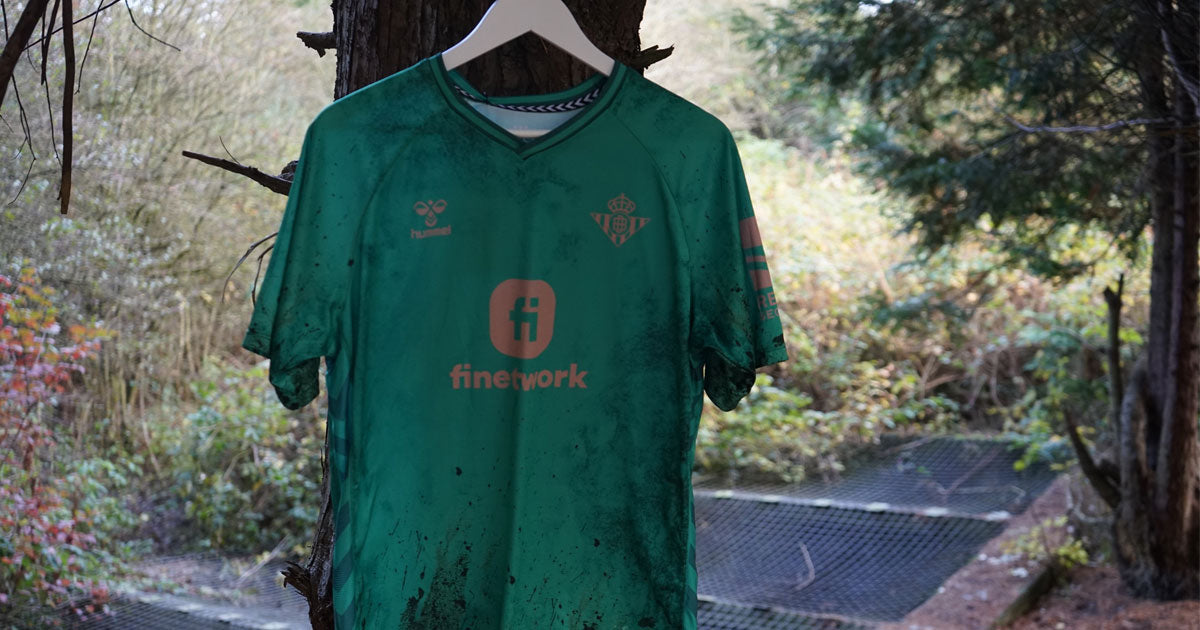
Mud and grass stains. Let mud dry completely before attempting to remove it. Trying to clean wet mud rubs it further into the fabric fibres. Once dry, brush off as much as possible, then pre-soak the stained area in cold water with a small amount of mild detergent before washing as normal. For grass stains, a diluted solution of white vinegar applied before washing helps break down the green pigment.
Sweat and odour. Soak the shirt in a mixture of cold water and white vinegar (roughly one cup of vinegar per sink of water) for 30 minutes before washing. The acidity of the vinegar breaks down sweat residue and neutralises odour without damaging the fabric.
General stains. Always patch test any stain remover on an inconspicuous area of the shirt before applying it to a visible stain. Apply the stain remover to the affected area, leave for the recommended time, then wash as normal. Never apply stain remover directly to a badge or printed area.
Act quickly. The longer a stain sits in the fabric, the harder it becomes to remove. Wash or at least rinse a football shirt as soon as possible after it gets stained rather than leaving it.
Storing Your Football Shirt Collection
How you store your football shirts between wears affects their long-term condition as much as how you wash them.
- Store clean shirts only. Never store a shirt that has been worn and not washed. Sweat and body oils left in the fabric attract bacteria and cause long-term degradation of the material.
- Fold or hang on wide hangers. Thin hangers cause shoulder distortion over time. If hanging your collection, use wide, flat hangers that support the full shoulder.
- Keep away from direct sunlight. UV exposure fades colours even through glass. Store your collection away from windows or use UV-blocking blinds if storing near a window.
- For display, use UV-protective frames. If you are displaying shirts on the wall, UV-protective frames significantly slow colour fading compared to standard frames.
- For valuable or rare shirts, consider acid-free storage. Acid-free tissue paper and boxes are used by museum conservators to store vintage textiles. For particularly valuable retro football shirts, this level of care is worth considering.

The Most Common Washing Mistakes
These are the errors that damage football shirts most frequently when washing football shirts incorrectly:
- Hot wash. The most common and most damaging mistake. Always wash at 30°C or below.
- Tumble drying. The second most common. Air dry every time, no exceptions.
- Not turning inside out. Five seconds of effort that prevents significant print damage over time.
- Using fabric softener. It feels like good care but actively damages prints and adhesives.
- Washing with different colours. Colour bleeding is irreversible. Always separate.
- Leaving stains to set. The longer a stain stays in the fabric, the harder it becomes to remove cleanly.
- Storing damp shirts. Mildew is permanent. Always store completely dry.
- Ironing directly on prints or badges. If you do iron, always iron inside out on the lowest heat setting and never directly on any printed or applied element.
Frequently Asked Questions
What temperature should I wash a football shirt at?
Wash football shirts at 30°C or below. Most care labels recommend 30°C as the maximum. Hotter temperatures cause colours to fade, prints to crack, and fabric to shrink. For retro or vintage shirts, wash in the coldest water possible.
Can you put a football shirt in the tumble dryer?
No. Never tumble dry a football shirt. The heat and movement damages prints, cracks badges, fades colours, and can cause the fabric to shrink. Always air dry flat or on a wide hanger, away from direct sunlight and away from radiators.
Should I turn a football shirt inside out to wash it?
Yes, always. Turning your football shirt inside out before washing protects badges, prints, and sponsor logos from direct friction in the washing machine drum. It is one of the simplest and most effective steps you can take to extend the life of the shirt.
Can I use fabric softener on a football shirt?
No. Avoid fabric softener on football shirts. Fabric softener coats fibres in a way that can cause prints and sponsor logos to degrade over time. Use a mild colour-safe detergent instead and skip the softener entirely.
How do I wash a retro or vintage football shirt?
Hand wash retro and vintage football shirts in cold water with a small amount of mild detergent. Check the badge, prints, and sponsor logos for any damage before washing. Never use fabric softener. Never tumble dry. Air dry flat away from direct sunlight. For particularly valuable shirts, consider whether washing is necessary at all, light odours can often be aired out without washing.
How do I remove mud stains from a football shirt?
Let the mud dry completely before attempting to remove it. Brush off as much dried mud as possible, then pre-soak the stained area in cold water with a small amount of mild detergent before washing as normal at 30°C or below. Never rub wet mud further into the fabric.
How should I store my football shirt collection?
Store football shirts clean and completely dry, folded or hung on wide flat hangers, away from direct sunlight. UV exposure fades colours over time even through glass. For displayed shirts, UV-protective frames significantly slow fading. Never store damp shirts, mildew damage is permanent.
Add to your football shirt collection
As seen on BBC Dragons' Den. Every MJK shirt is 100% authentic, brand new, and arrives with original tags, ready to wear and built to last when looked after properly.
- Men's mystery football shirt box, from £37.99
- Women's mystery football shirt box, from £29.99
- Kids' mystery football shirt box, from £24.99
- Retro football shirt collection


Leave a comment
This site is protected by hCaptcha and the hCaptcha Privacy Policy and Terms of Service apply.